Matt, Satin or Metallic: Choosing the Right Paint Finish

  • Buying Guides
  • Colours
  • Tips

29 May 2026

Customers often ask us how we manage to keep the cost of our cast iron radiators so competitive. One simple way we achieve this is by offering a bespoke selection of paint finishes. Rather than offering every shade in the Pantone swatch book, we focus on a smaller range of timeless options that look stunning in period and contemporary properties alike.

Colour trends come and go, but your cast iron radiator colours should be effortlessly timeless. Our heritage-inspired palette is not only true to the original period, but also focused on efficiency. Did you know that cast iron radiators were originally available in black, as this is the most effective colour for thermal efficiency?
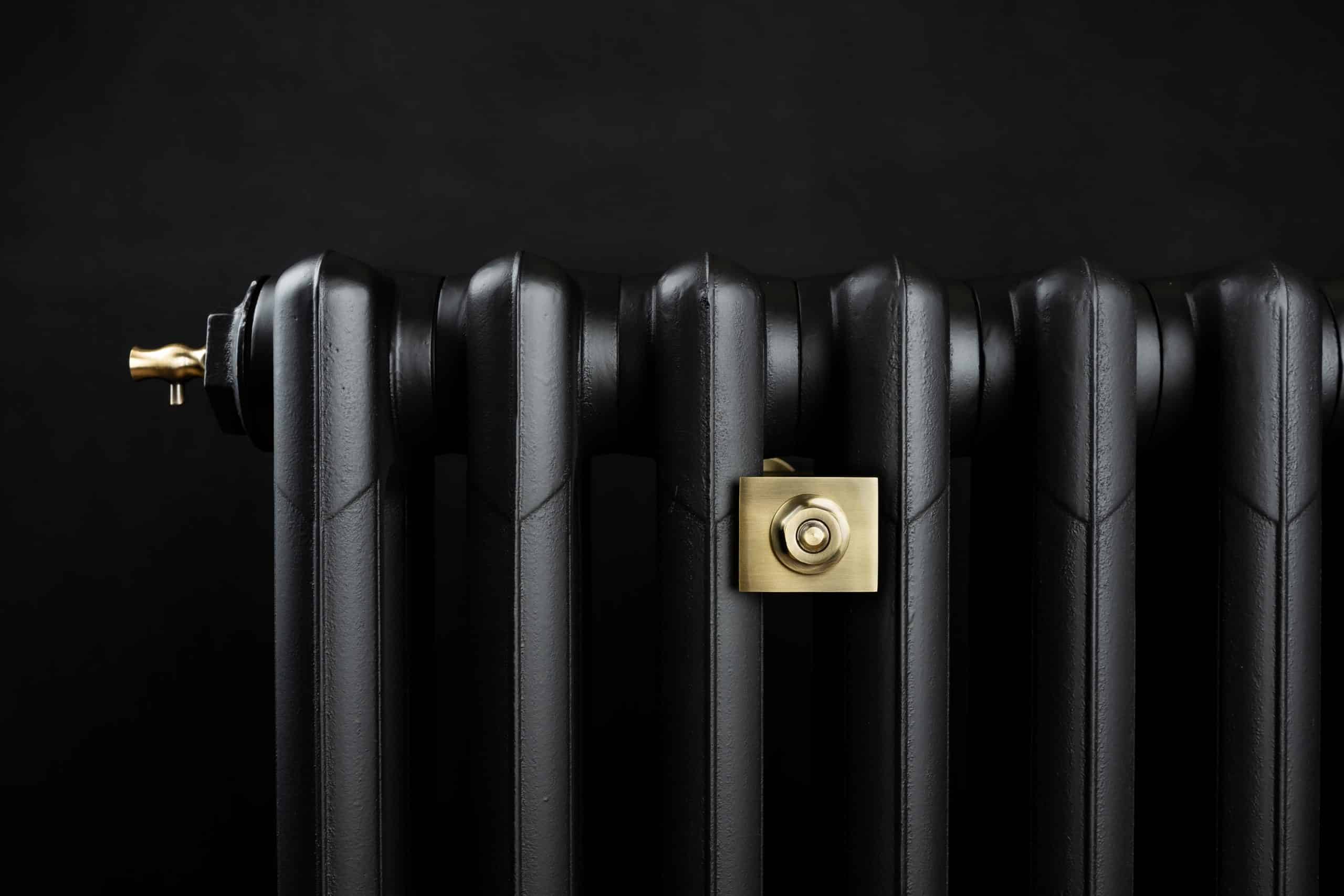
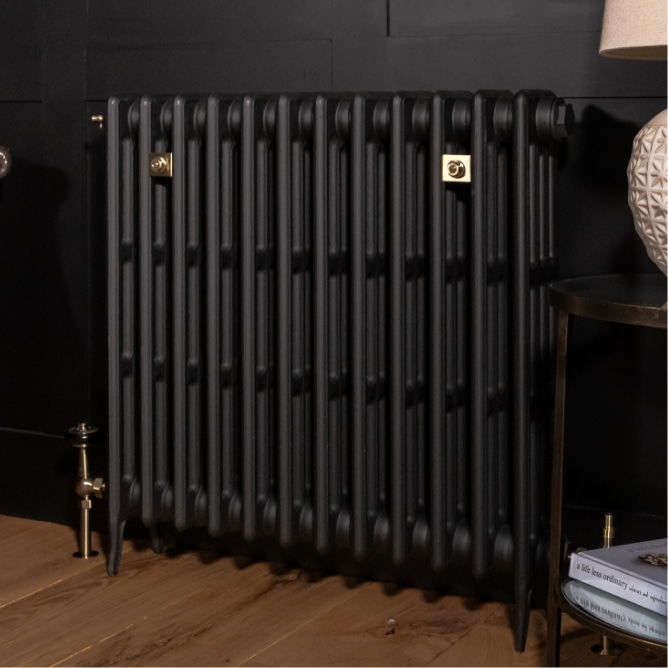
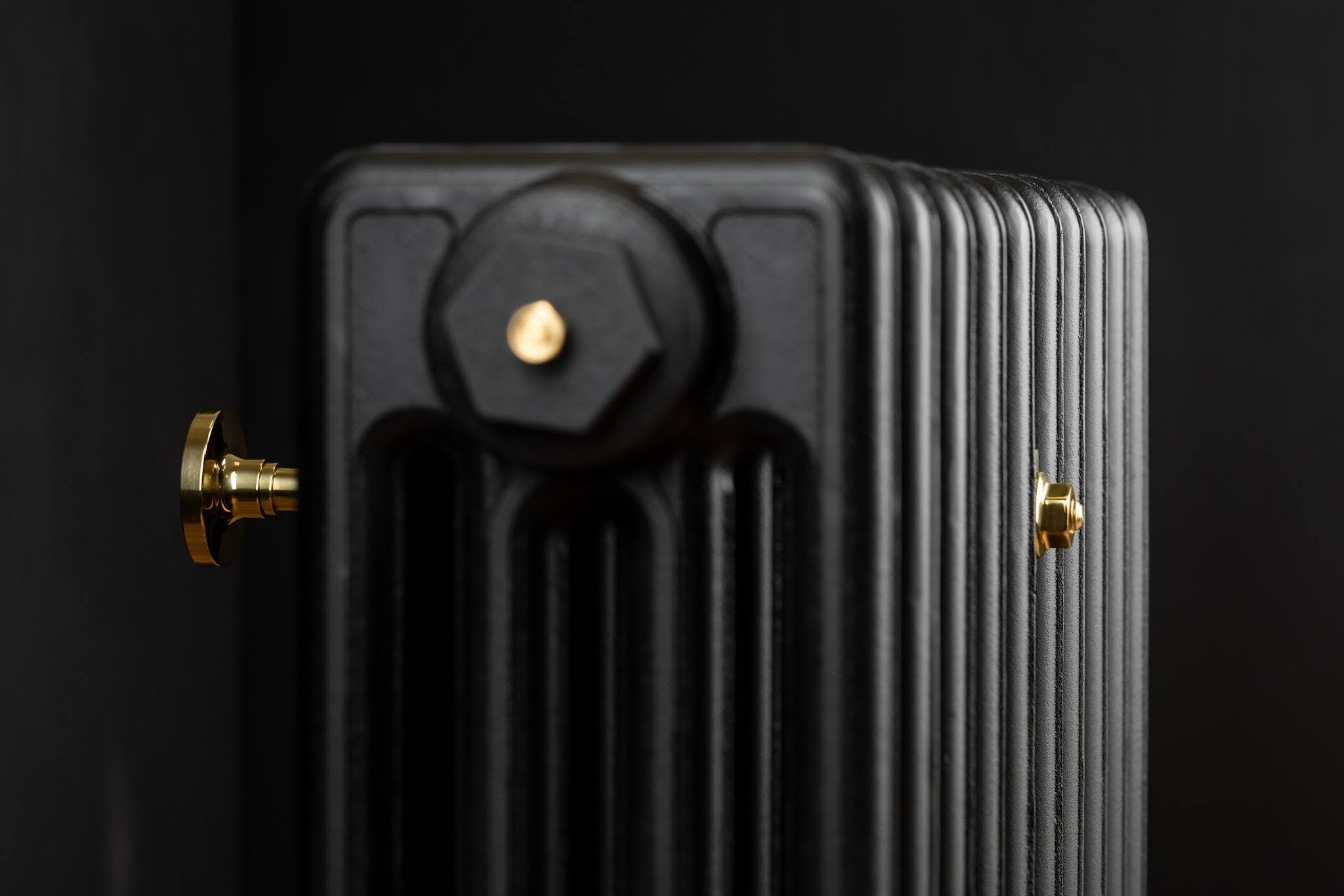
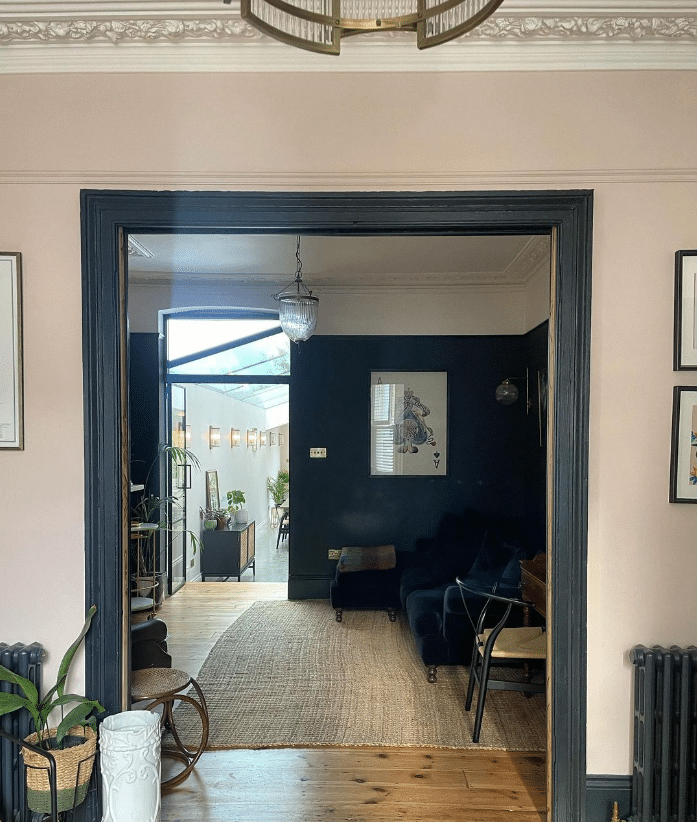
Black radiator against dark background

Within our selection of five versatile shades, you’ll find a world of possibilities – and don’t forget the role of the valves and accessories to further elevate your selection.

Let’s take a deep dive into the world of colour, finish and accessories so you can make a confident choice at the checkout.

Introducing our cast iron radiator colours

When ordering cast iron radiators from us, you’ll have your choice of style, height, length and colour. Our signature colour collection includes:

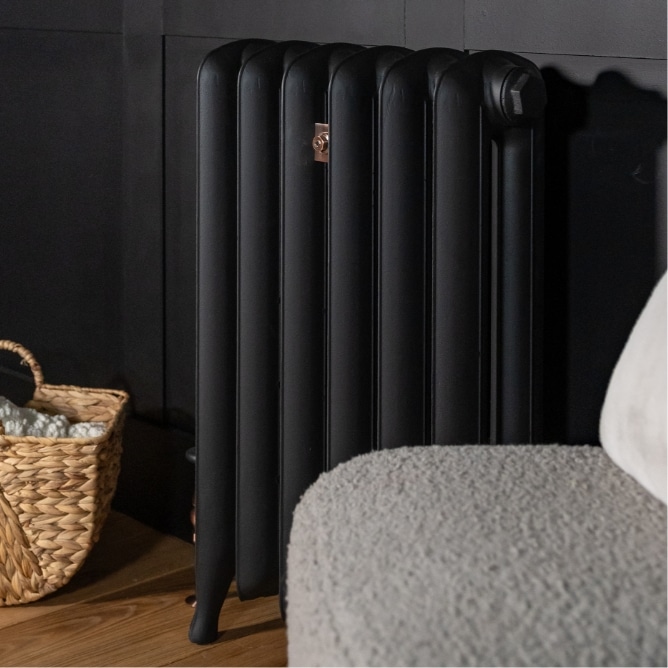
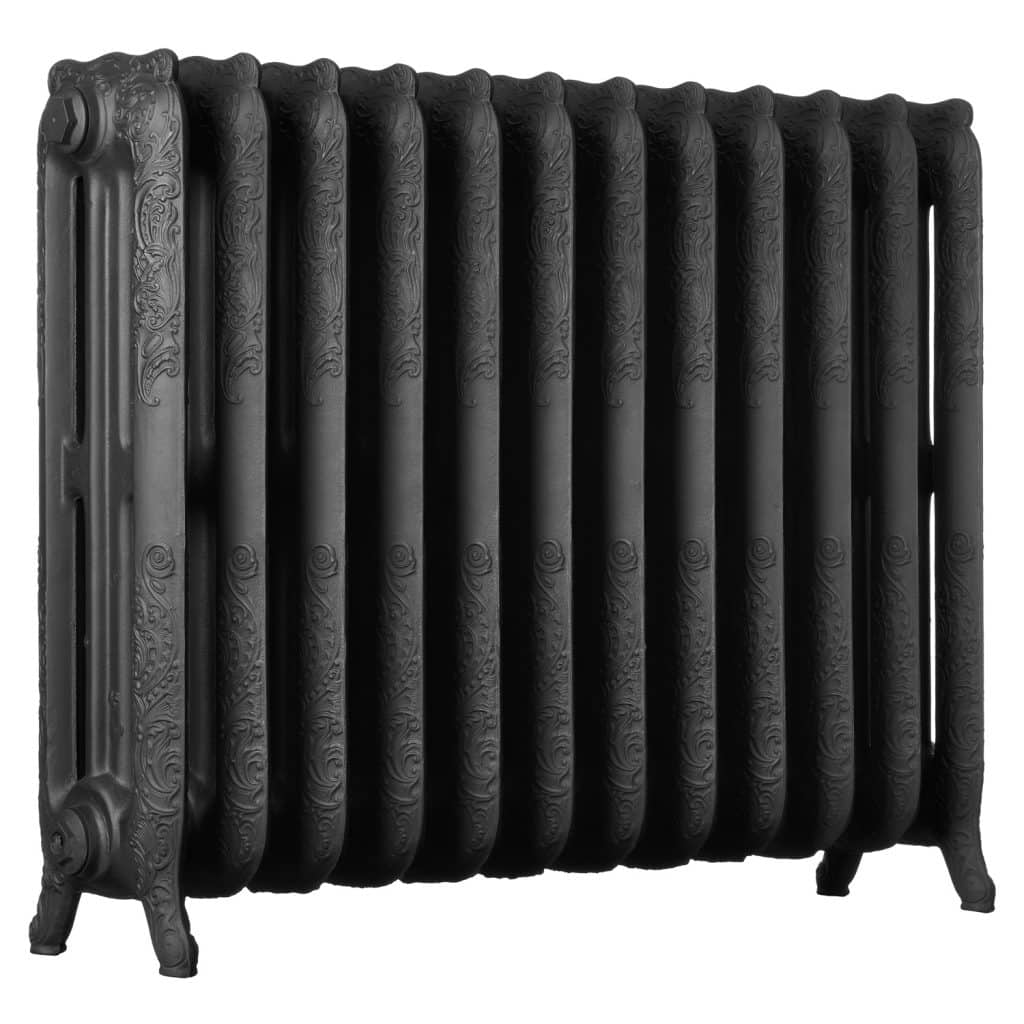
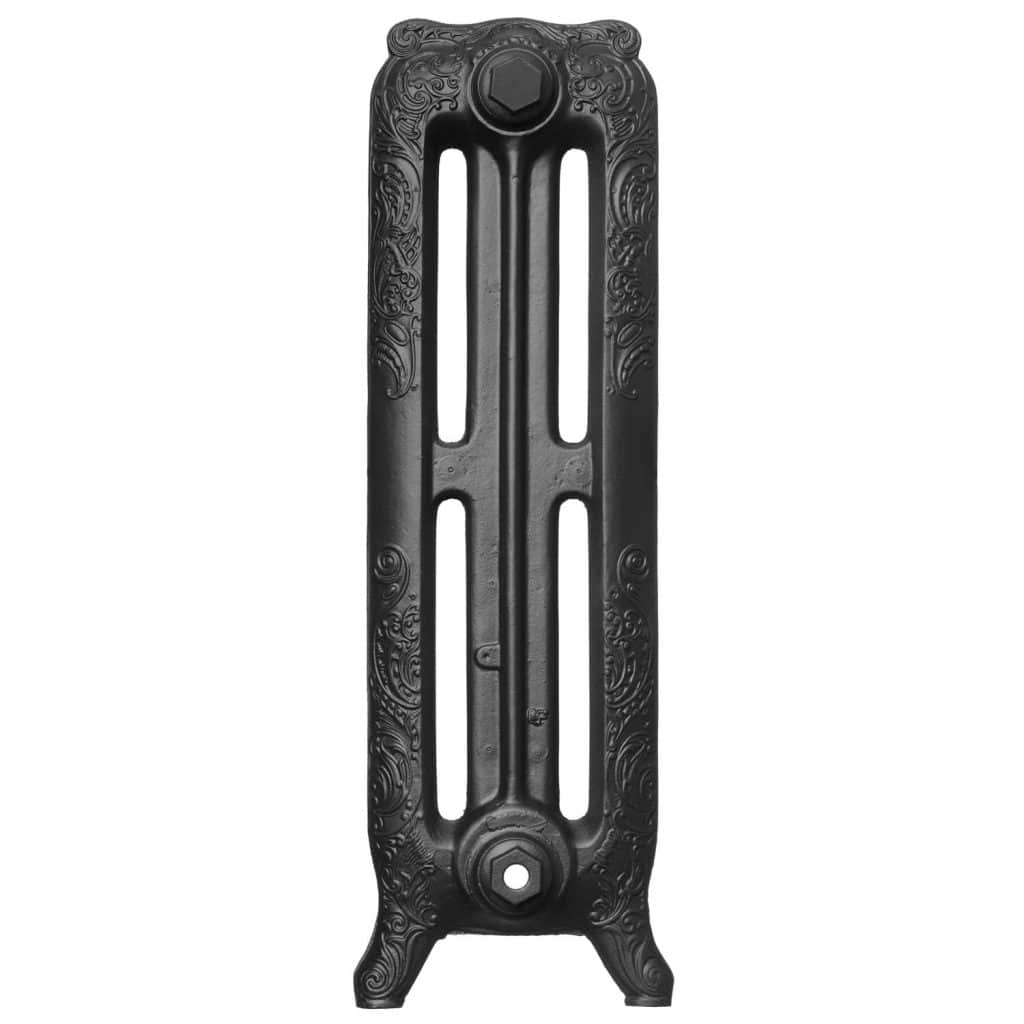
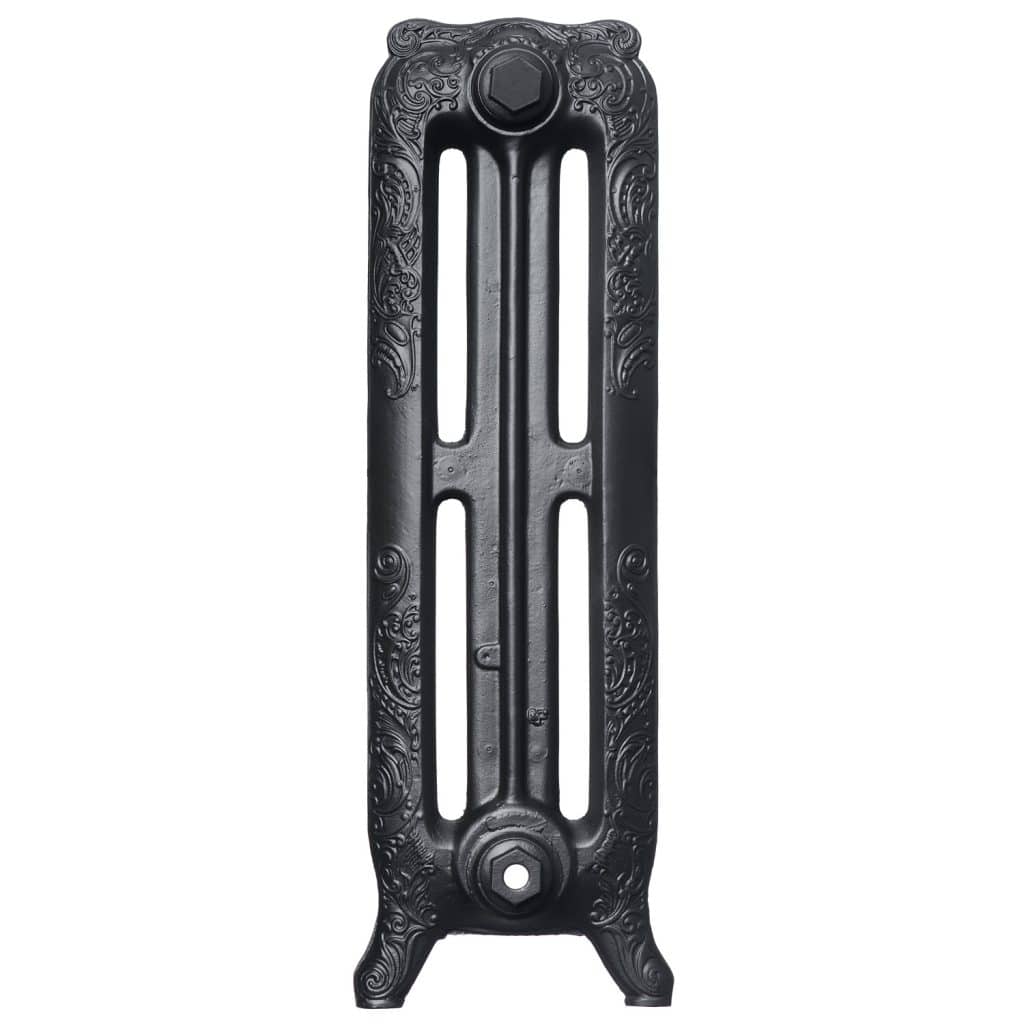
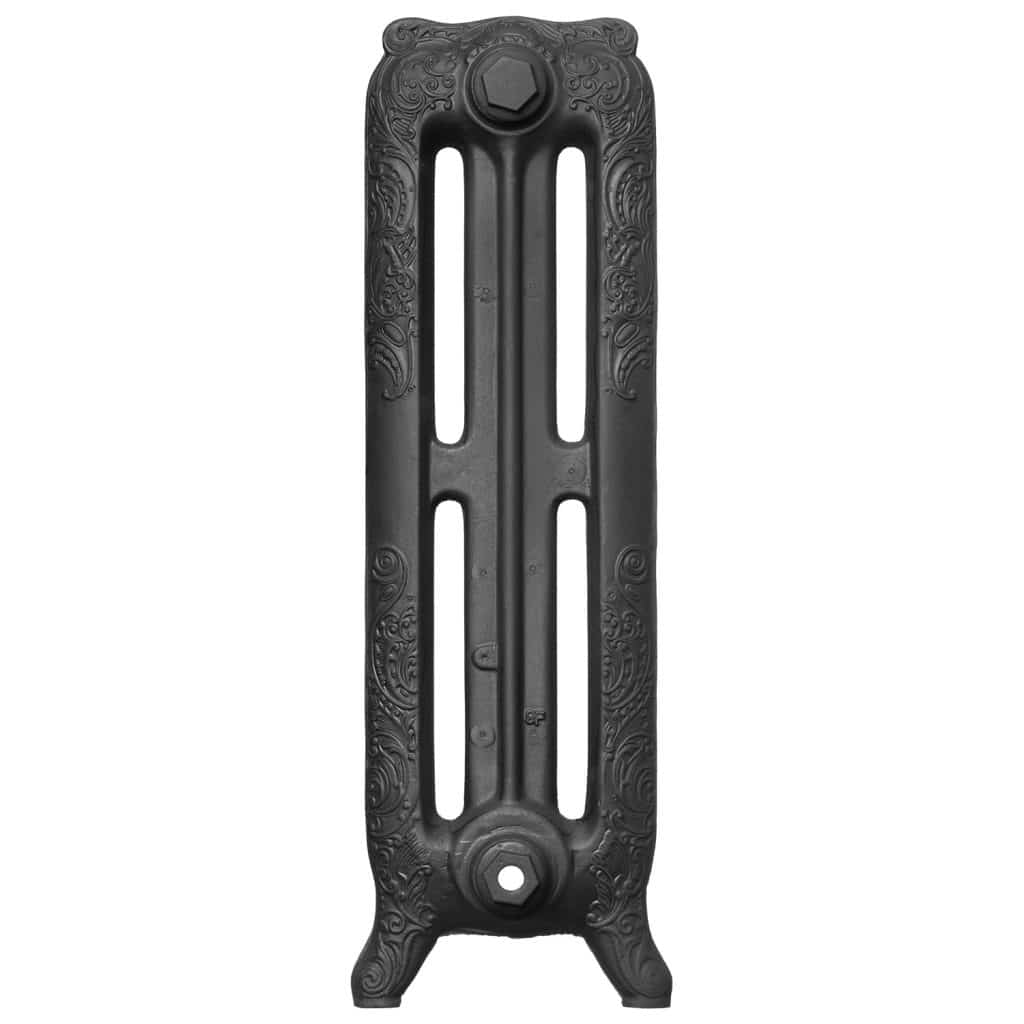
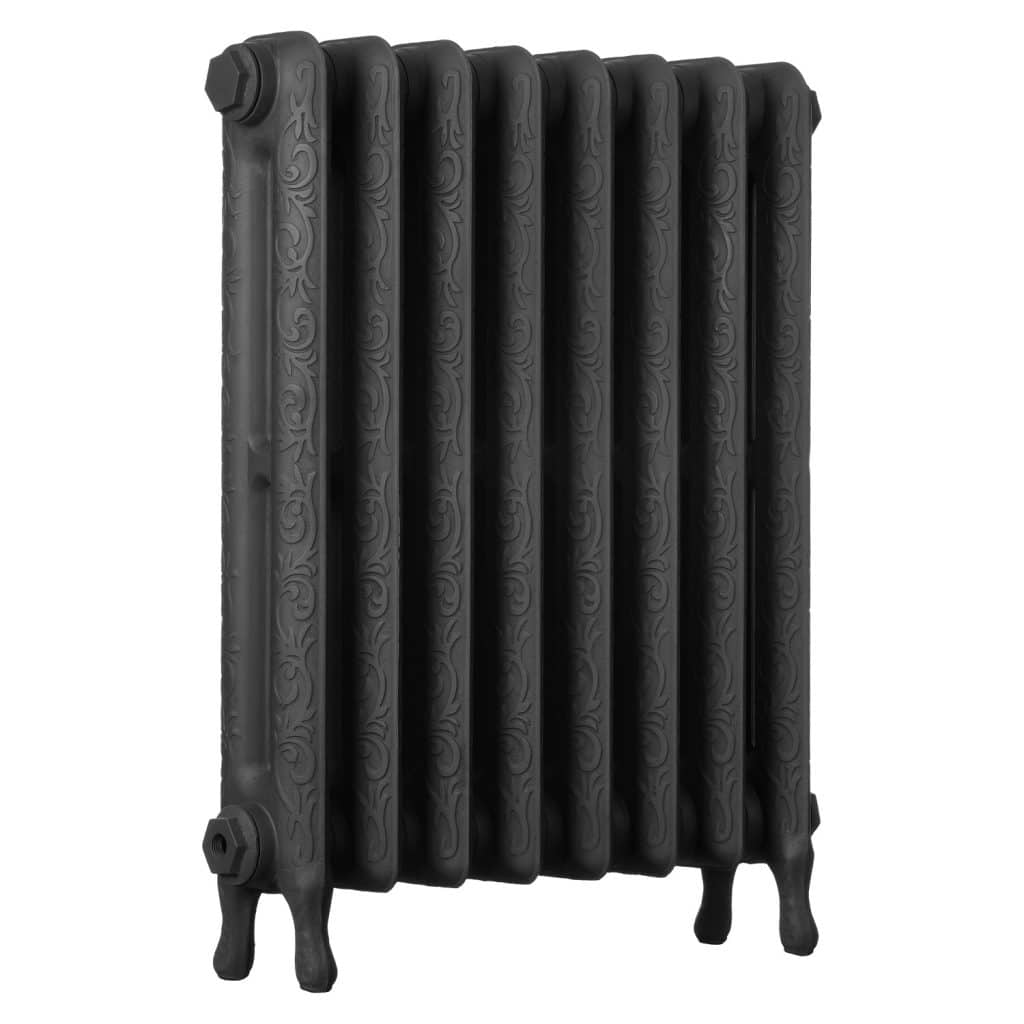
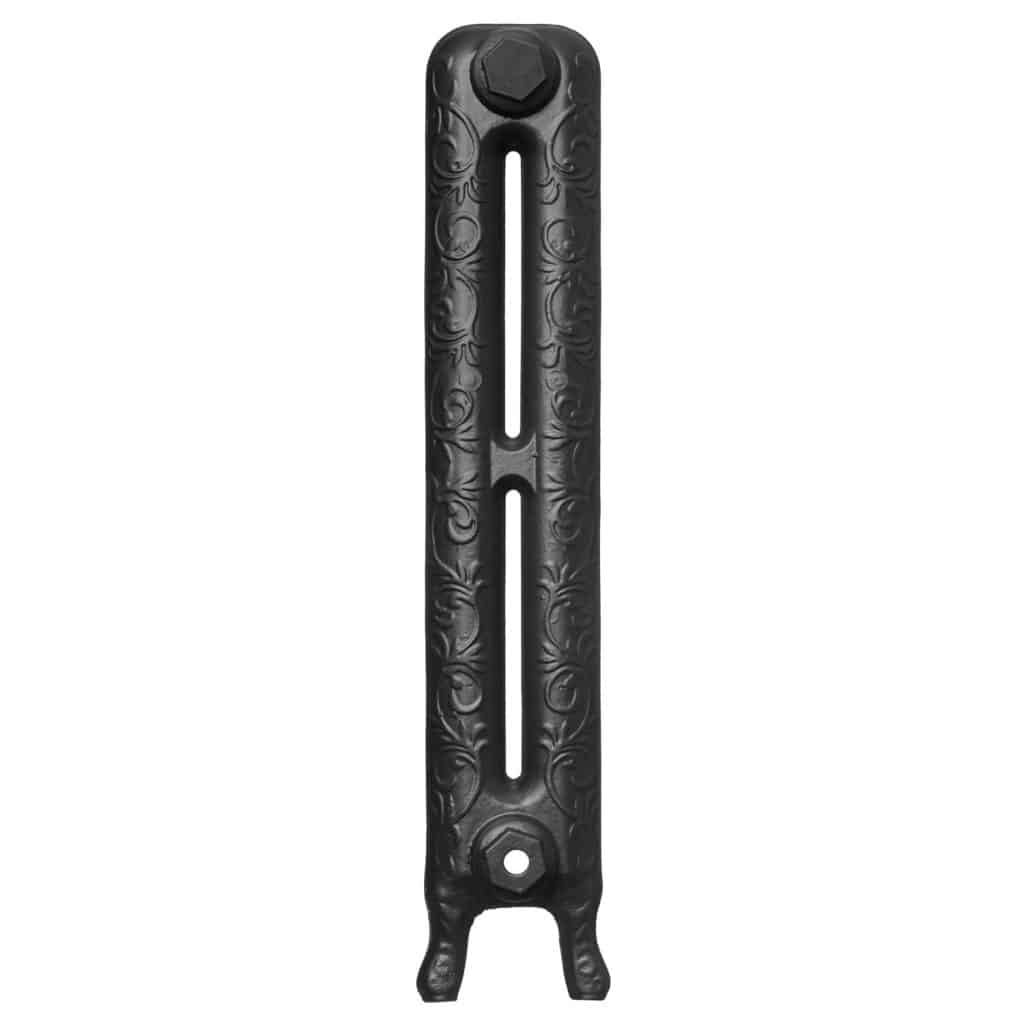
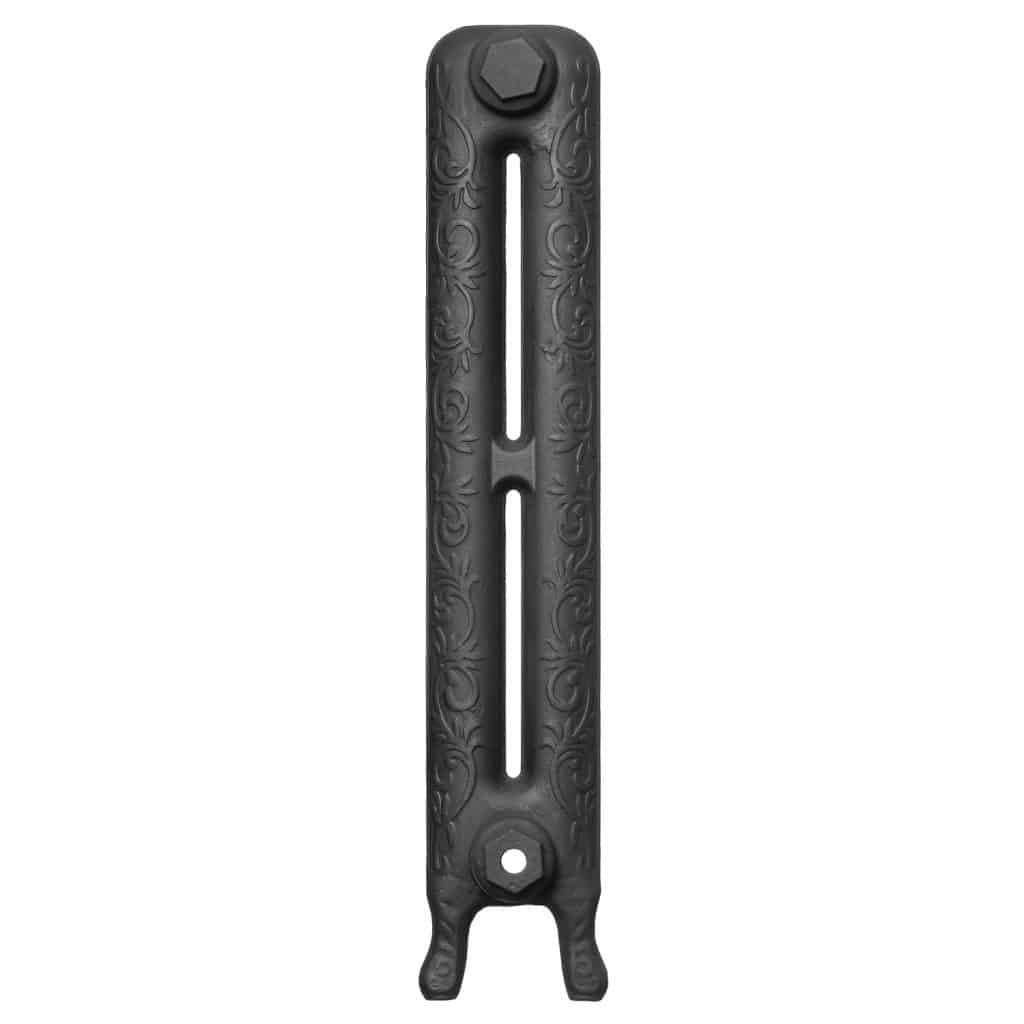
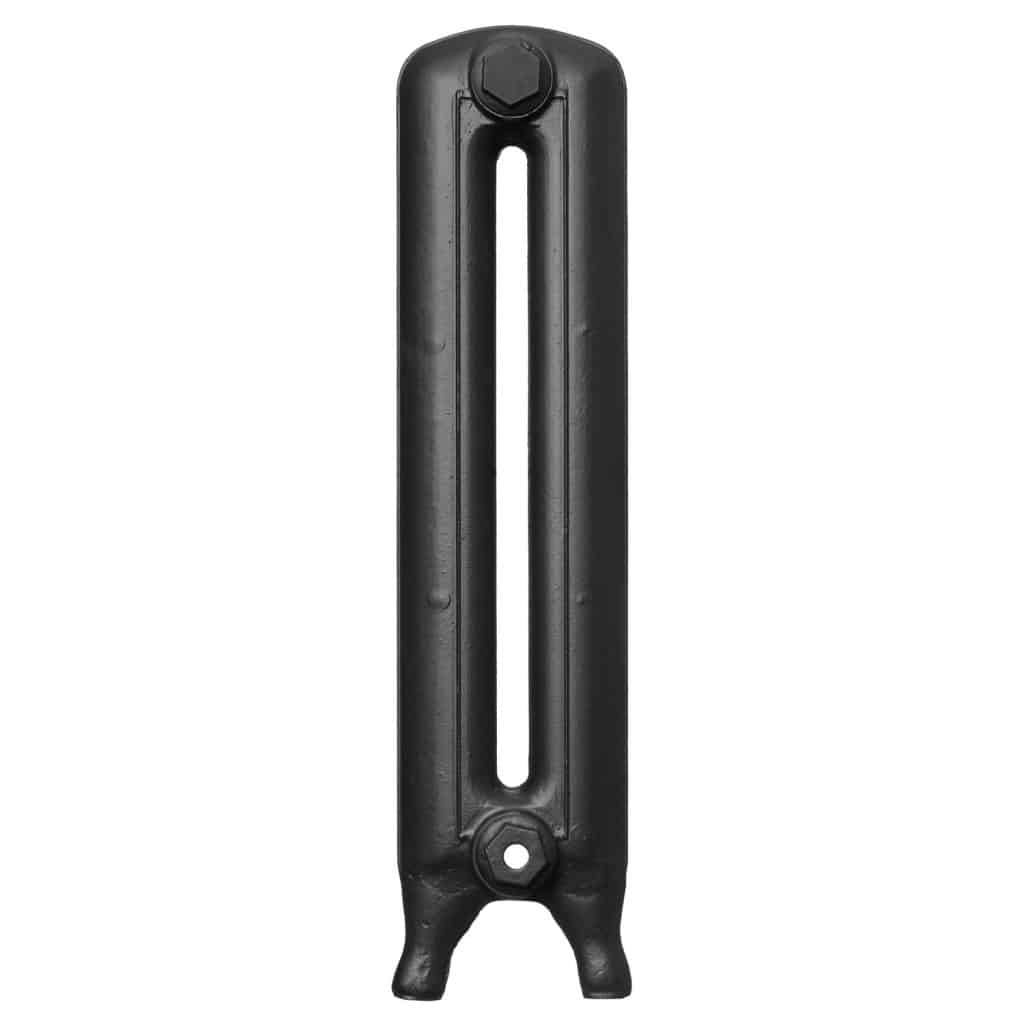
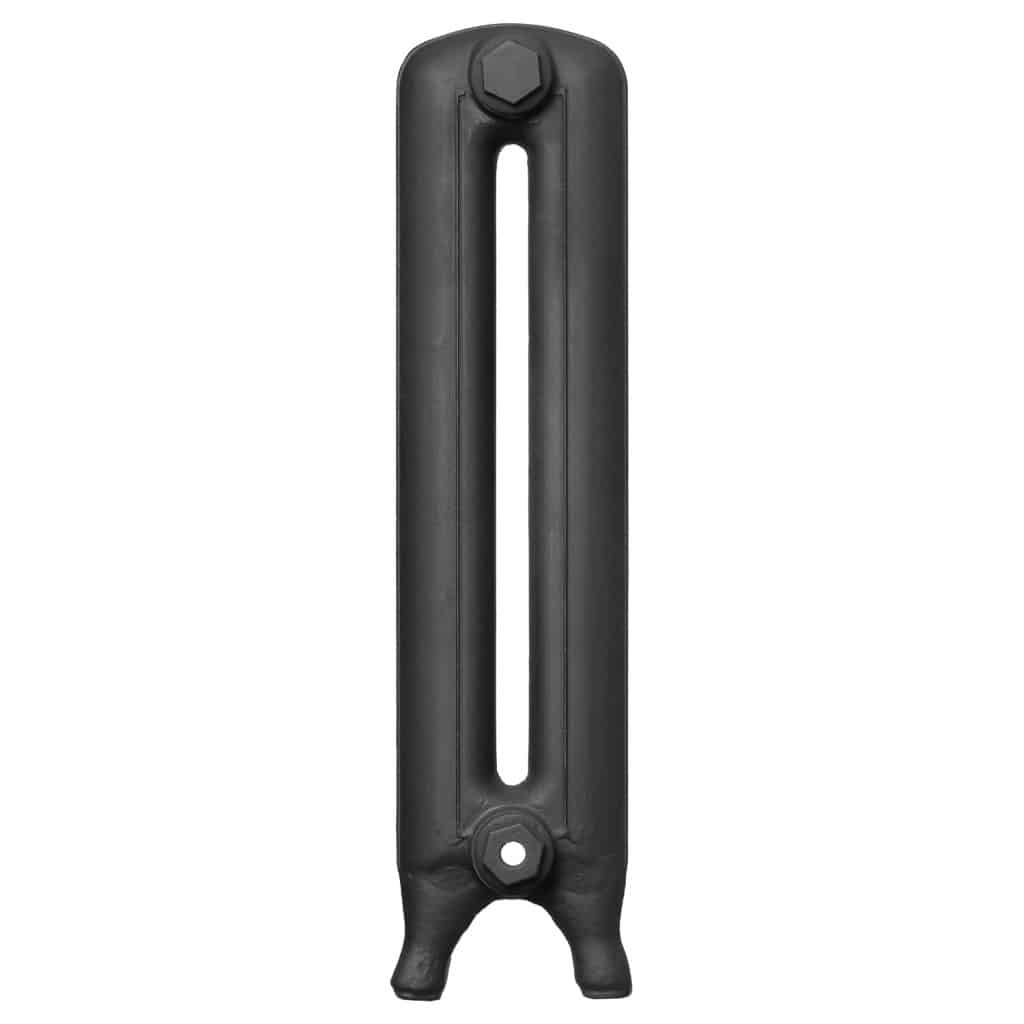
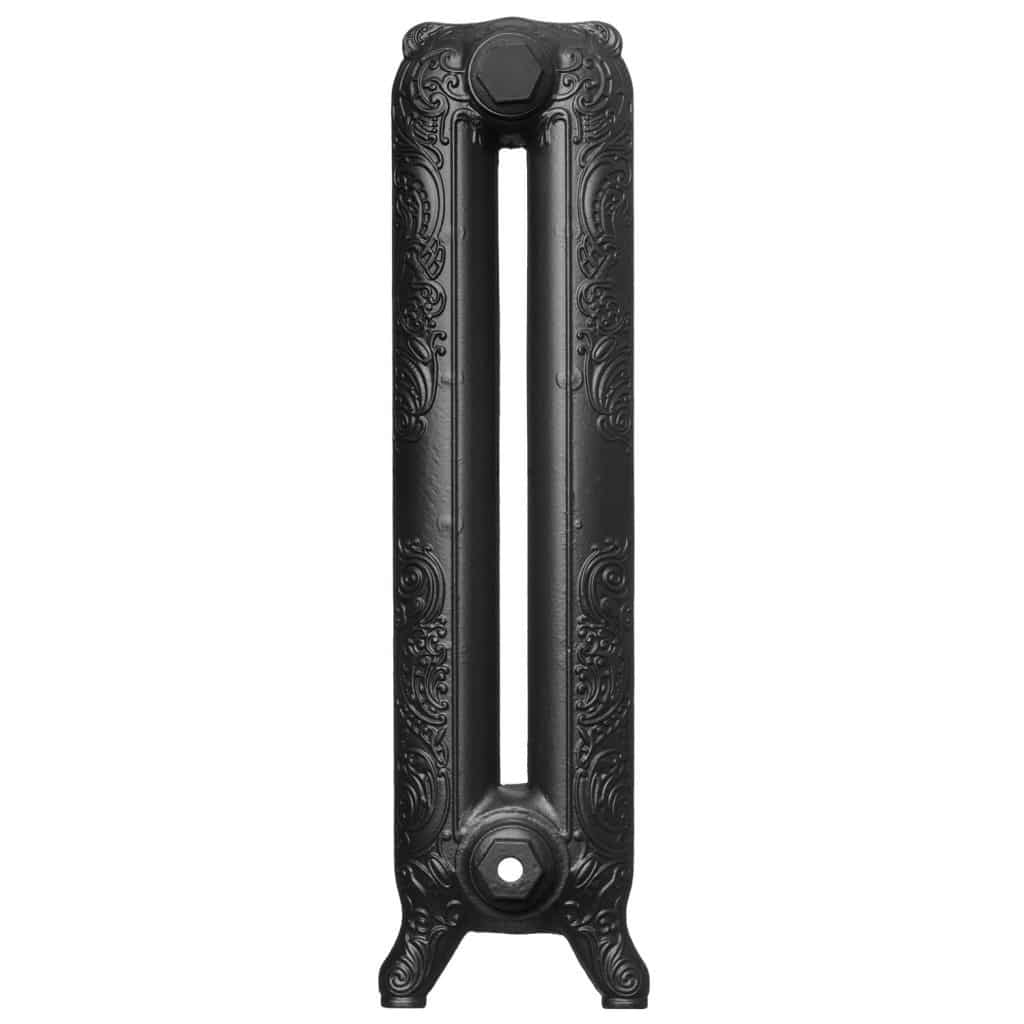
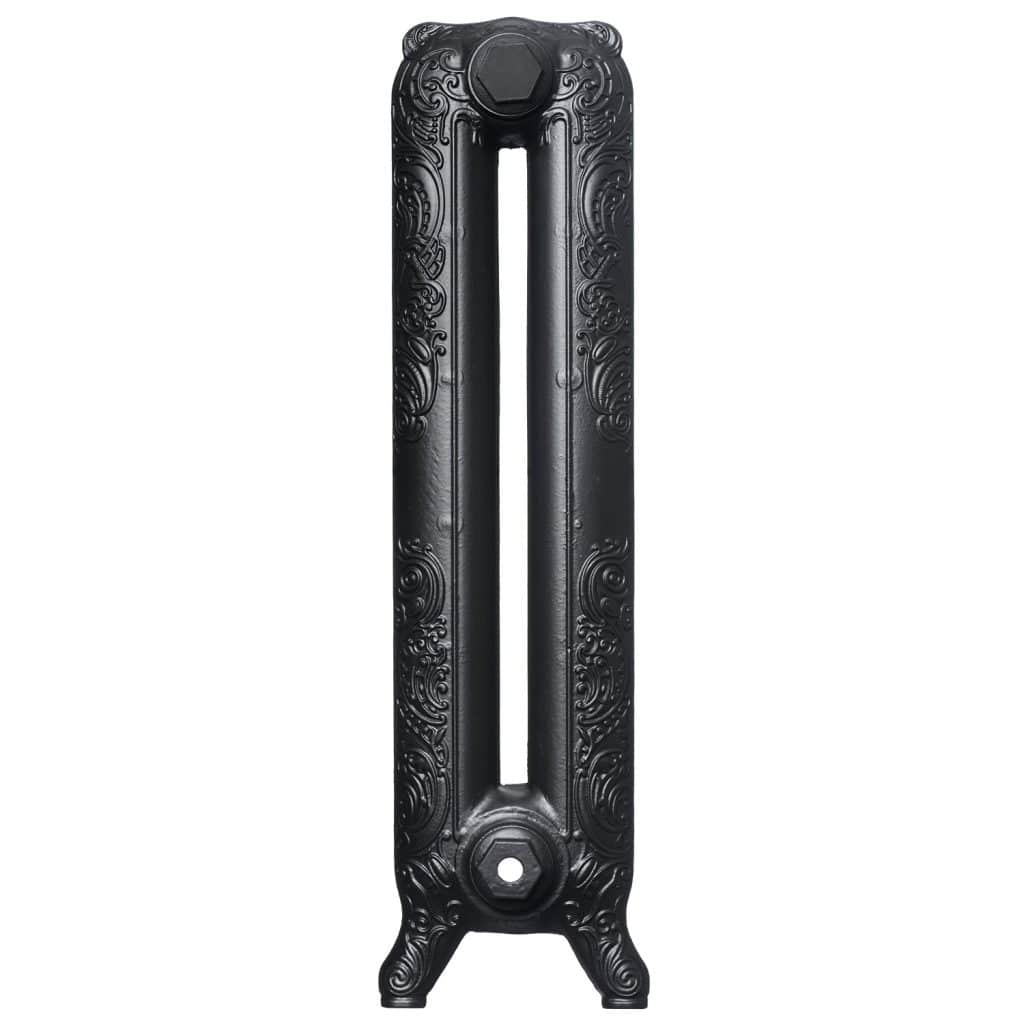
  • Matt black – a flat black shade that absorbs the light like velvet.
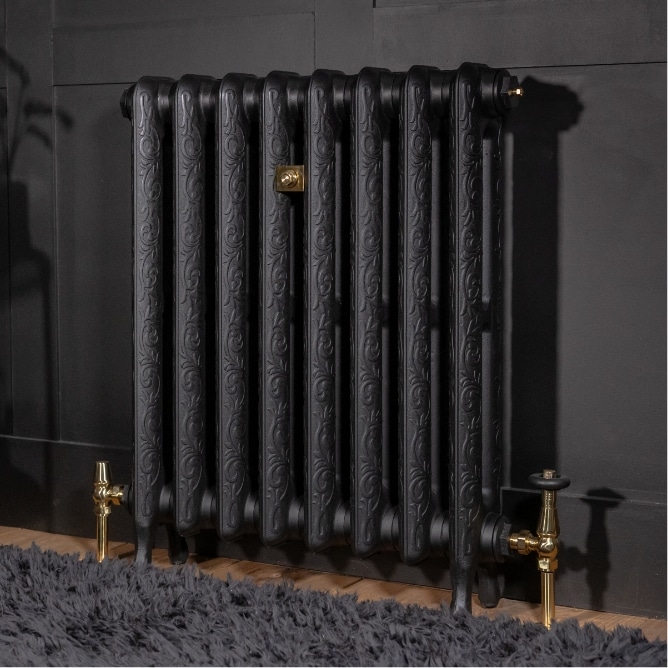
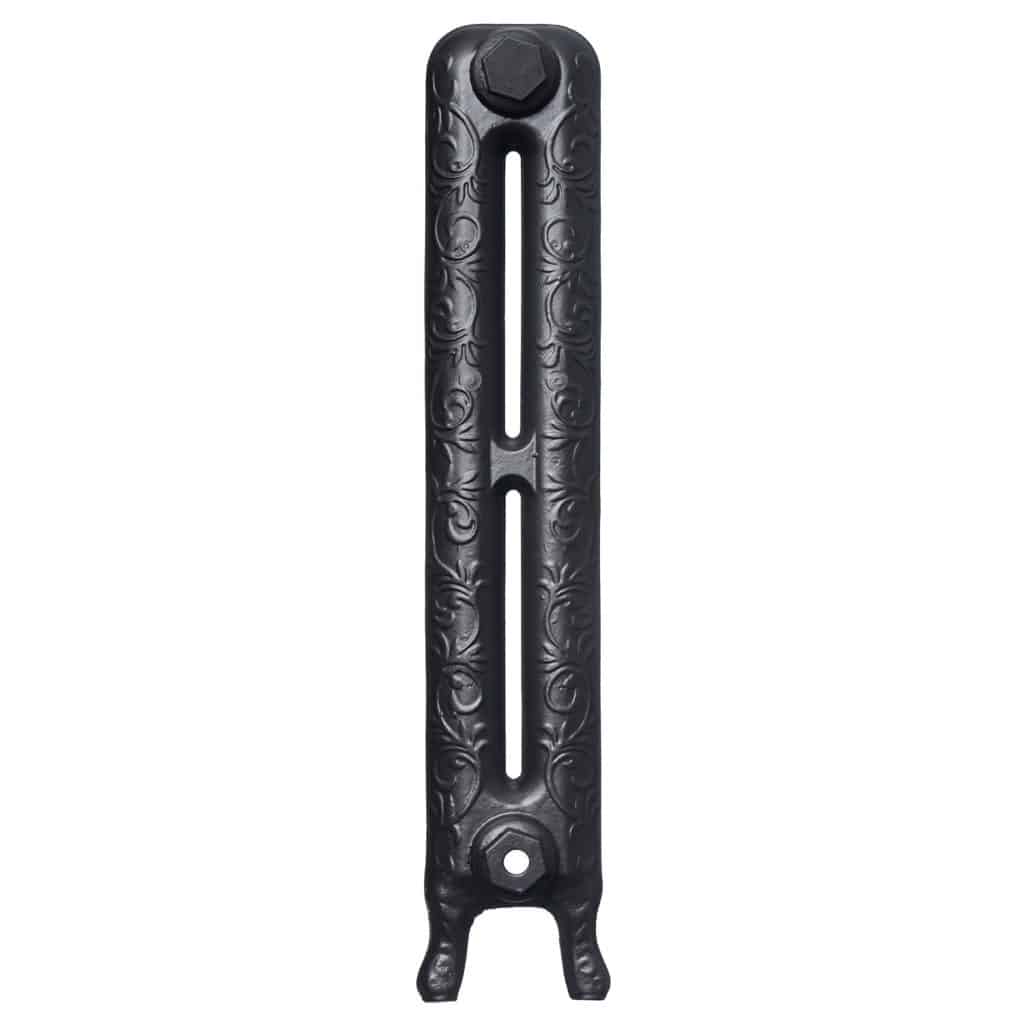
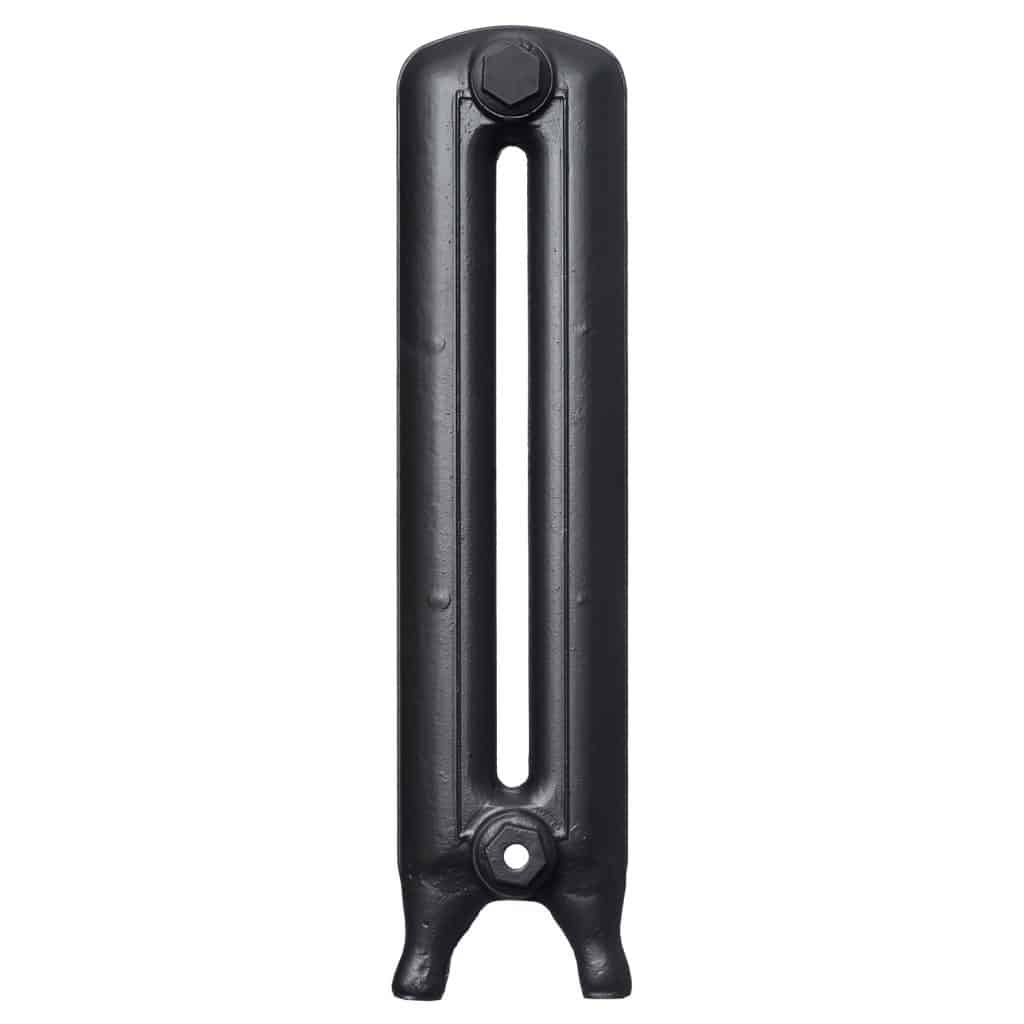
  • Satin black – a subtly satin shade of black that highlights the texture of the casting.
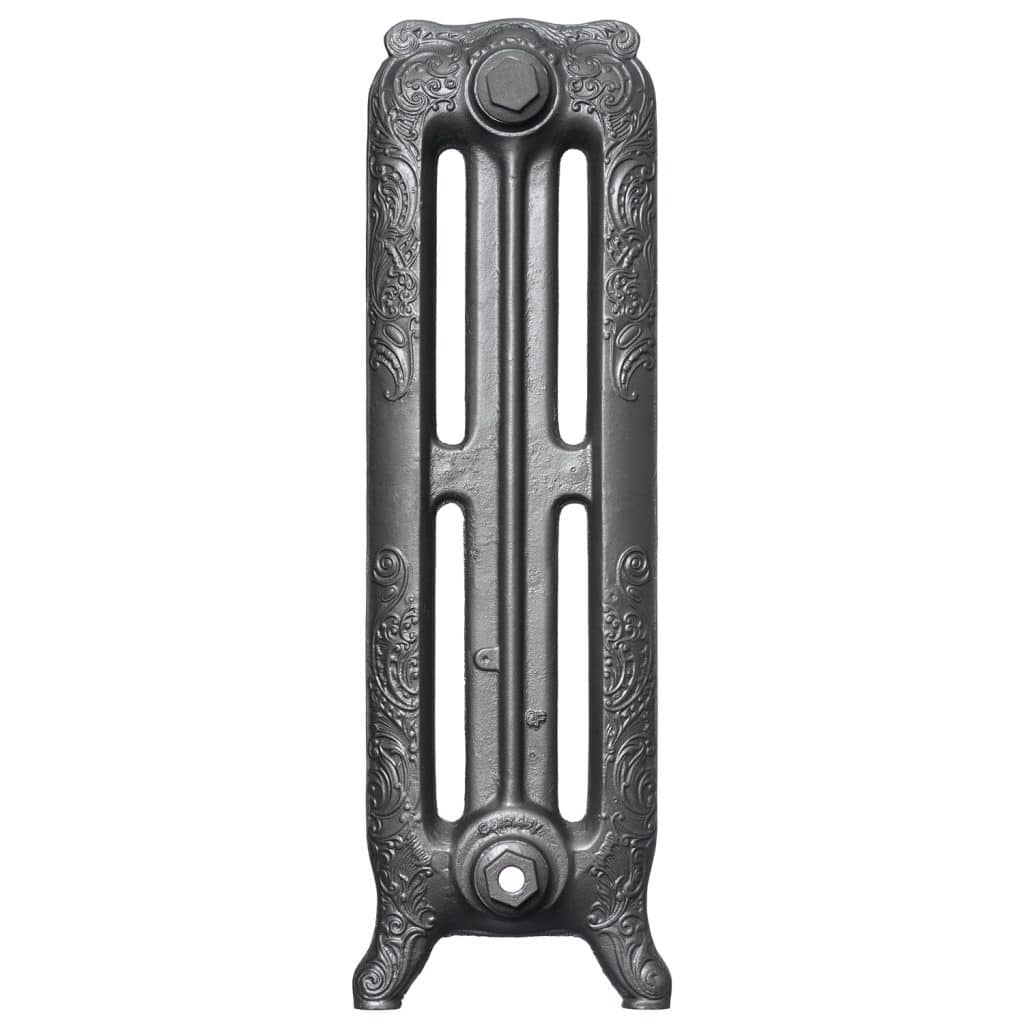
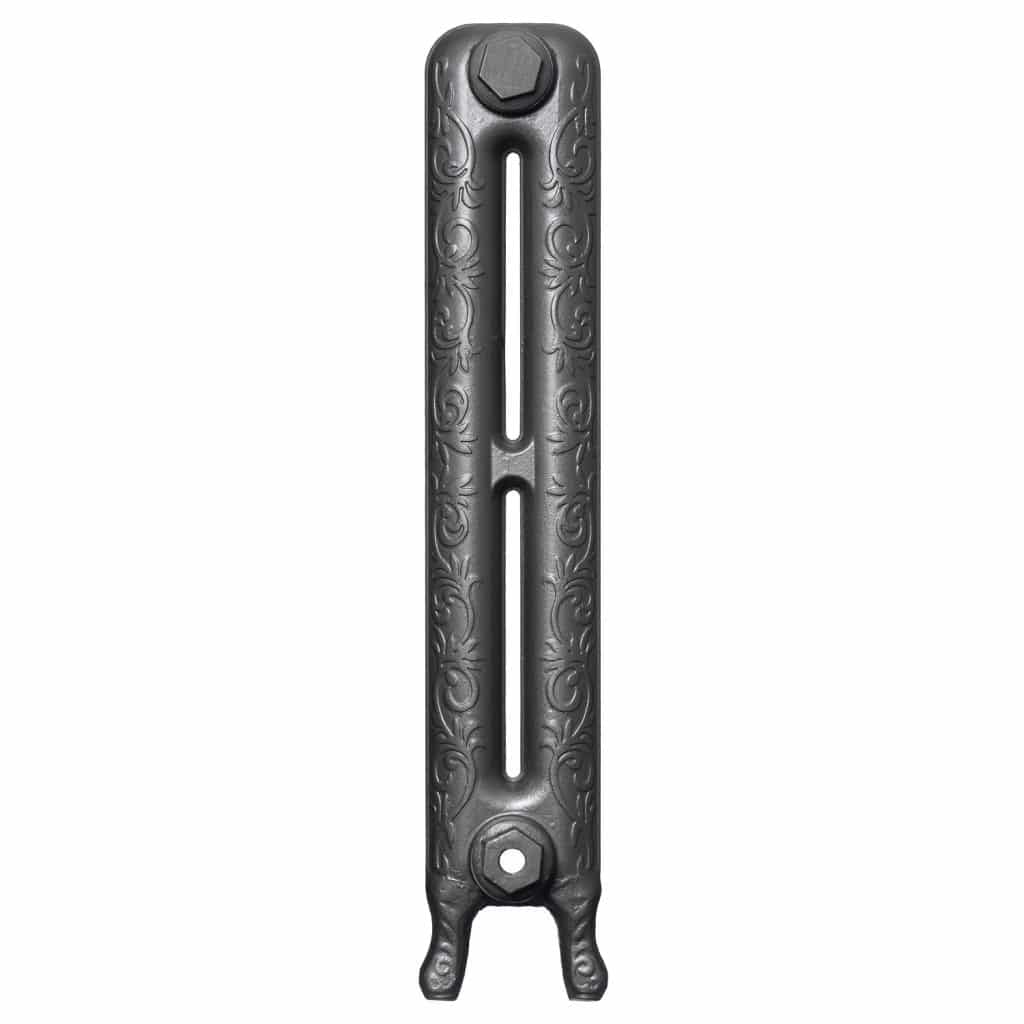
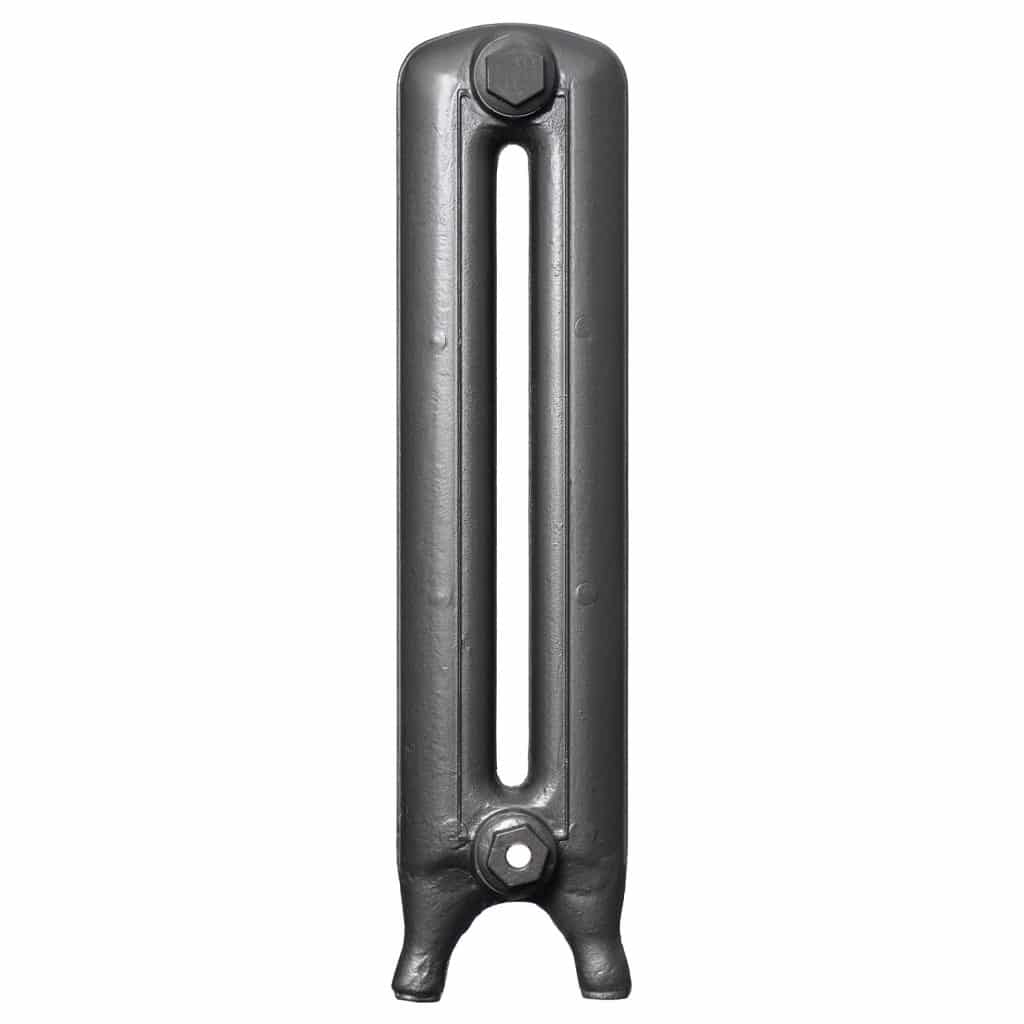
  • Gunmetal grey – a cool-toned grey colour with a metallic finish.
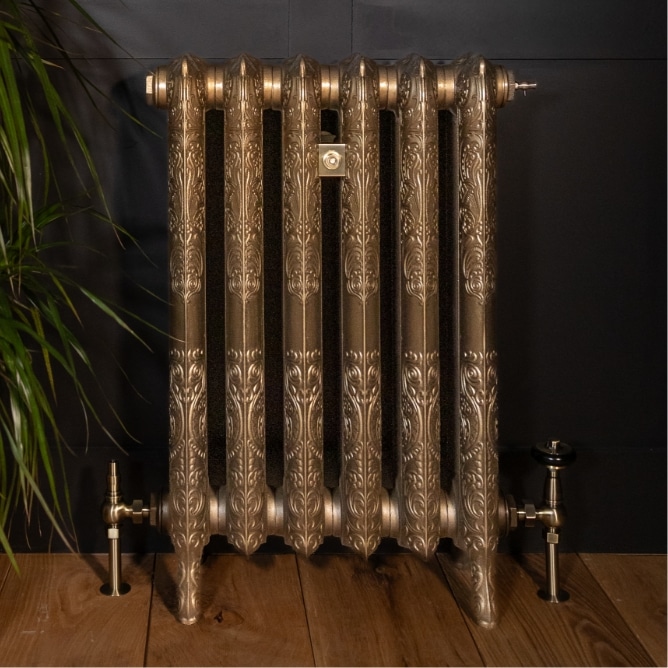
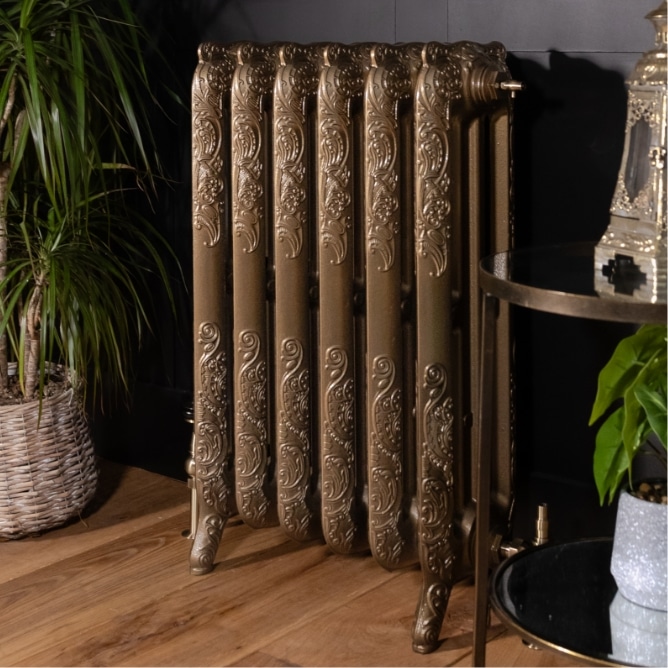
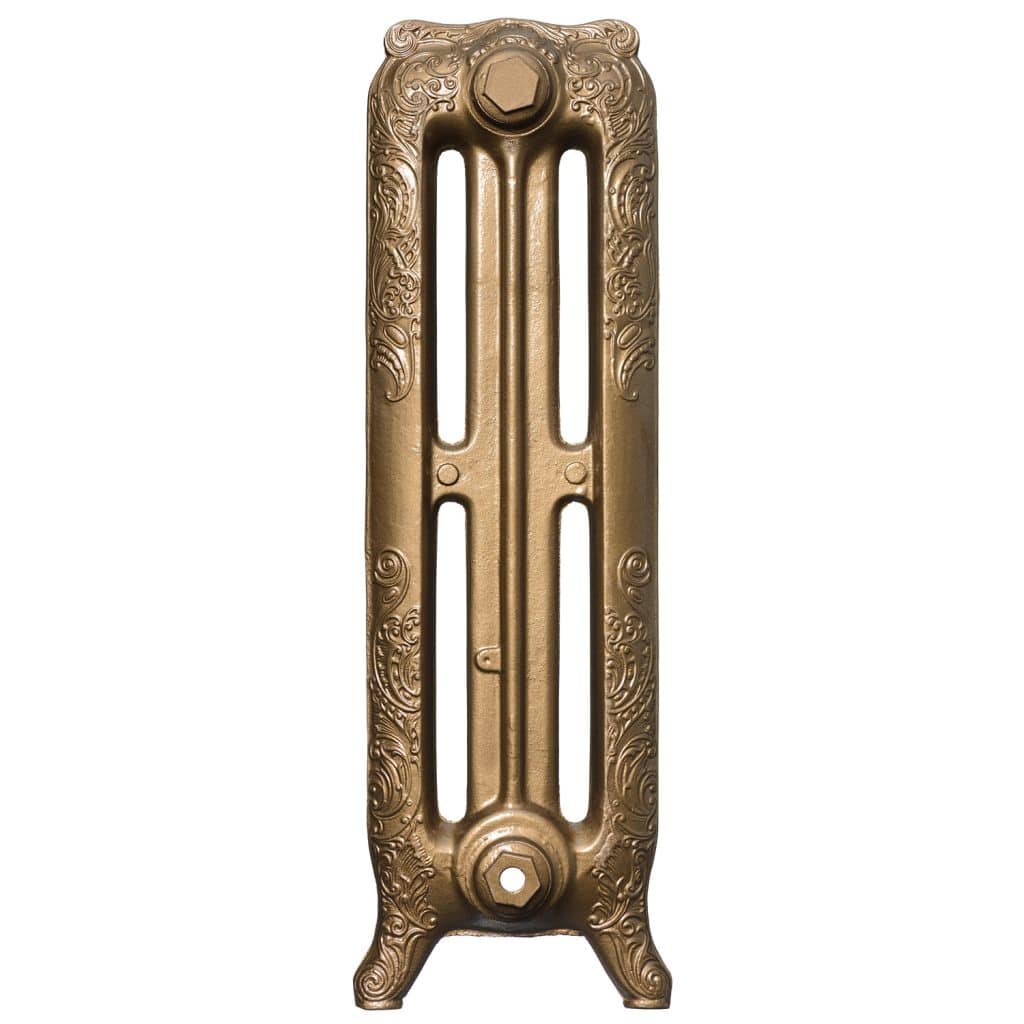
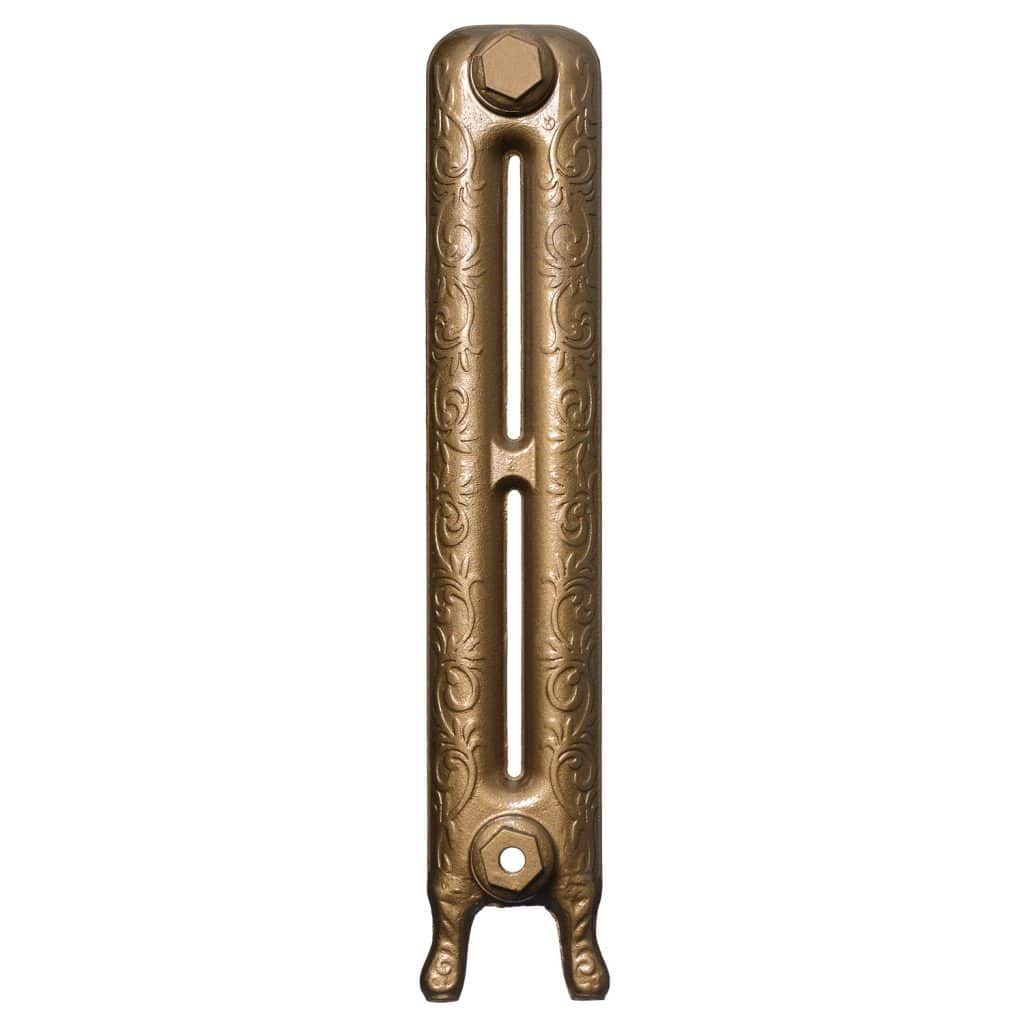
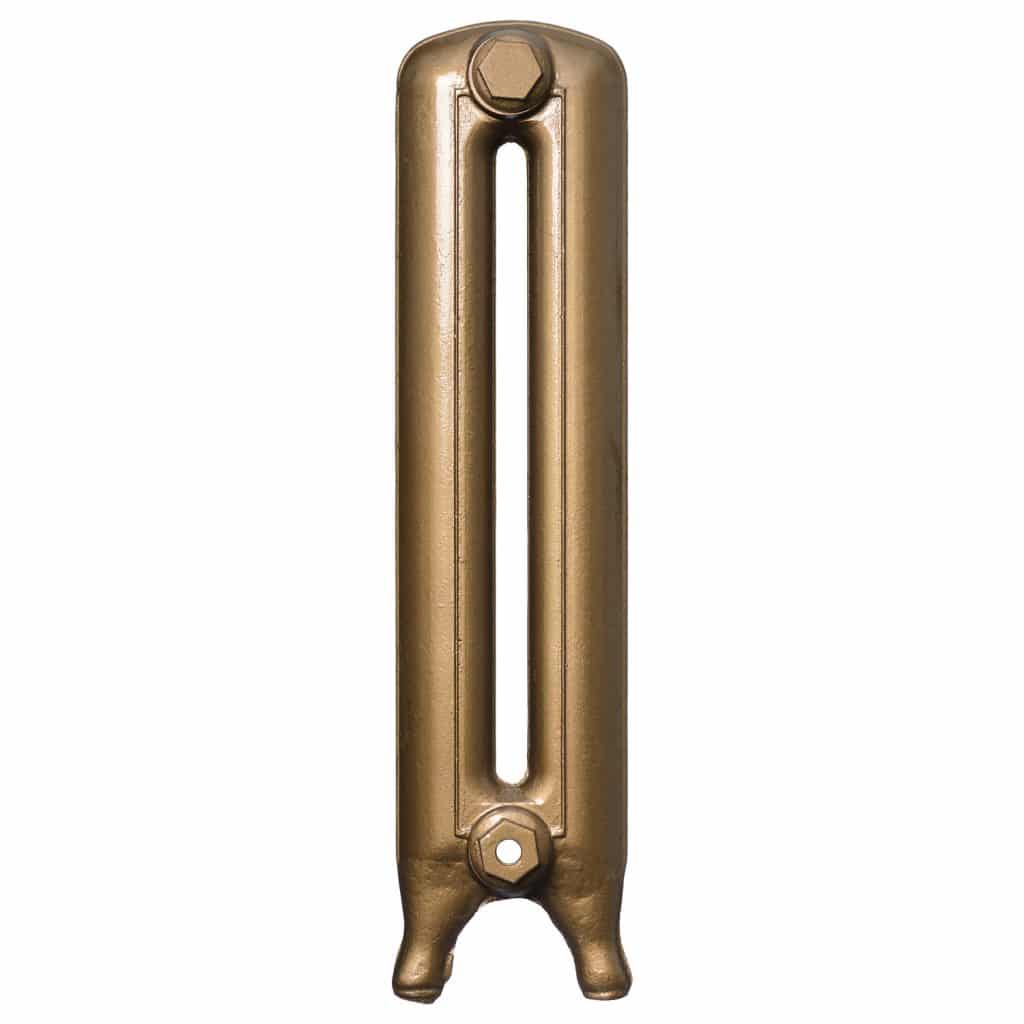
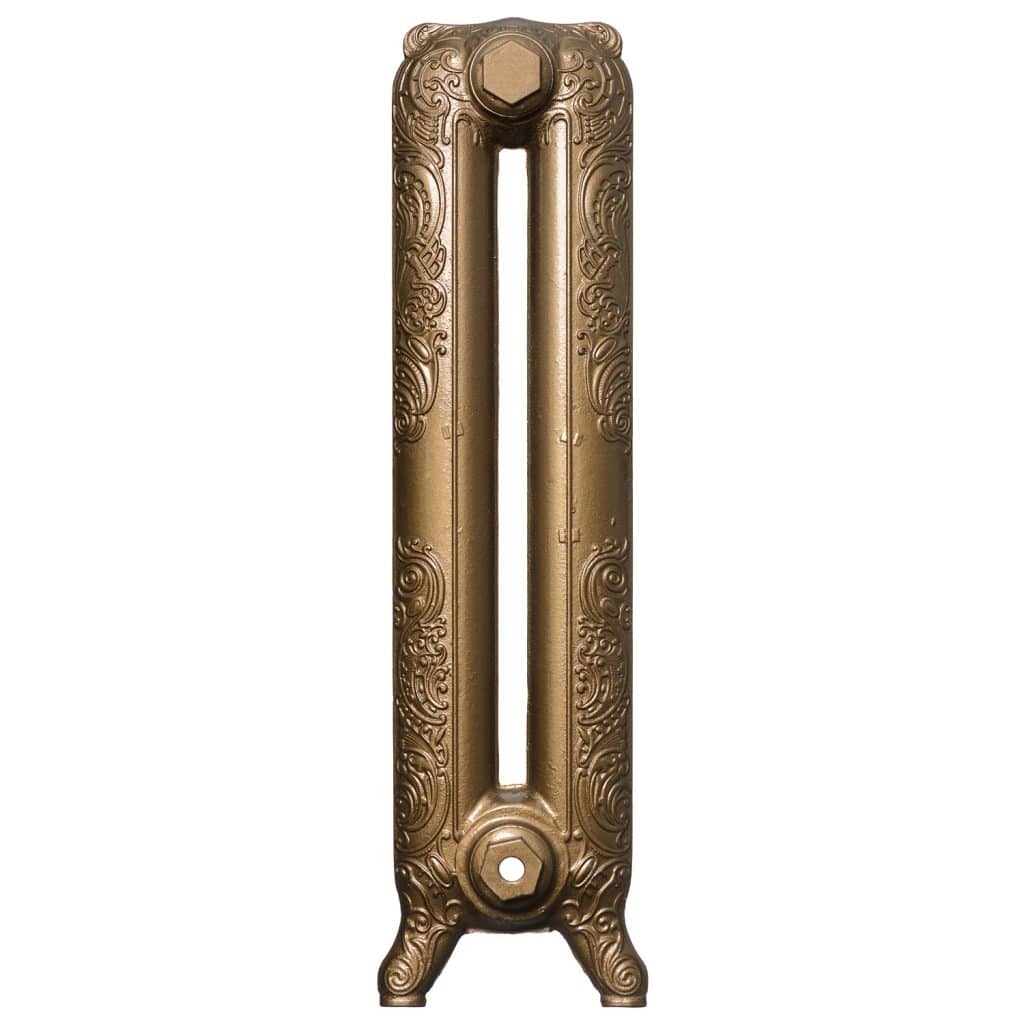
  • Antique bronze – a warm-toned mocha shade with a golden metallic finish.
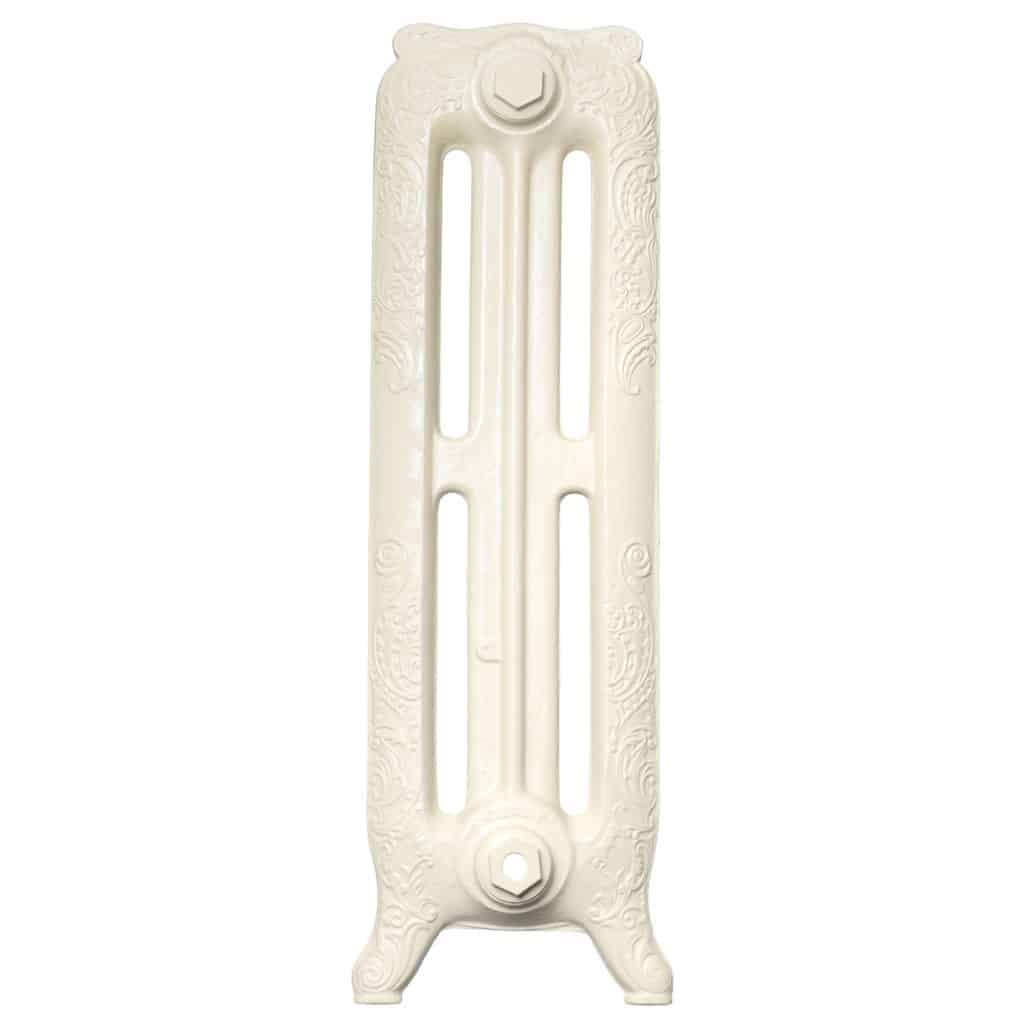
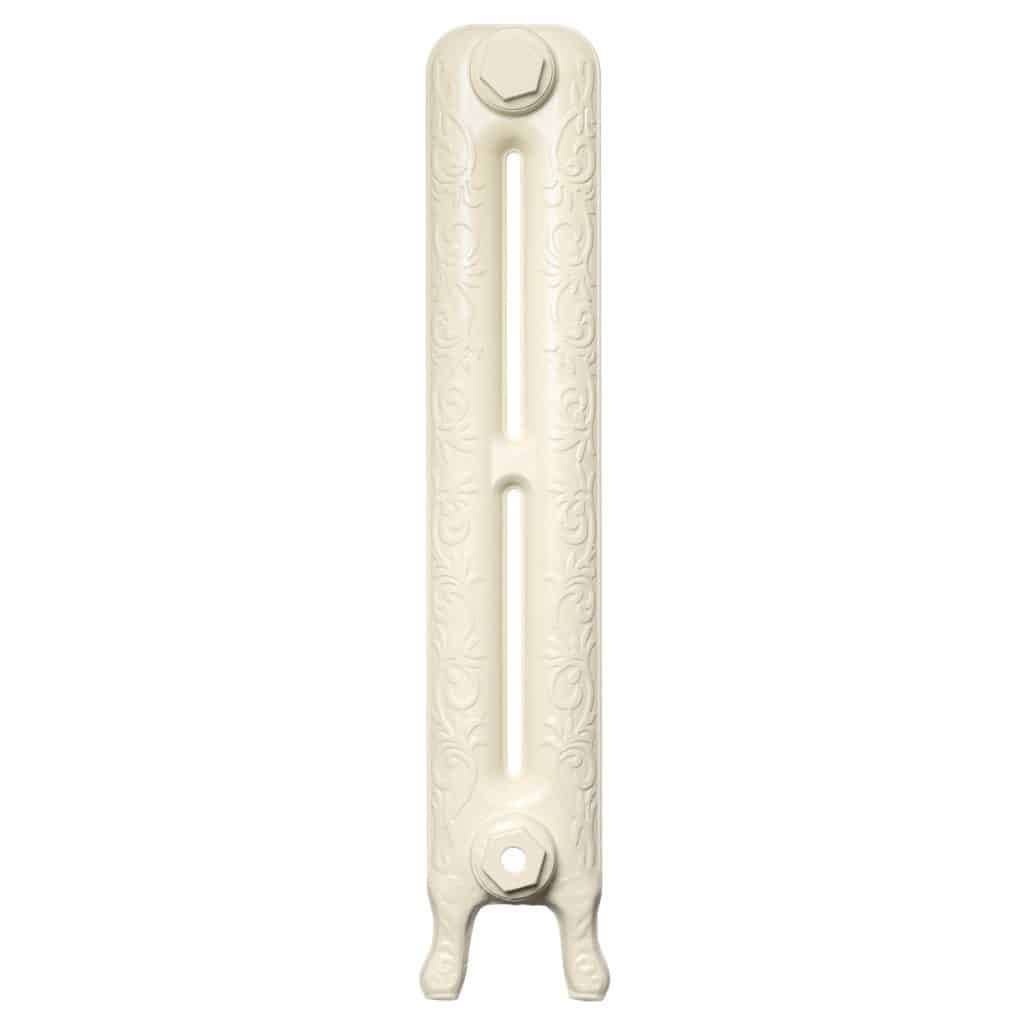
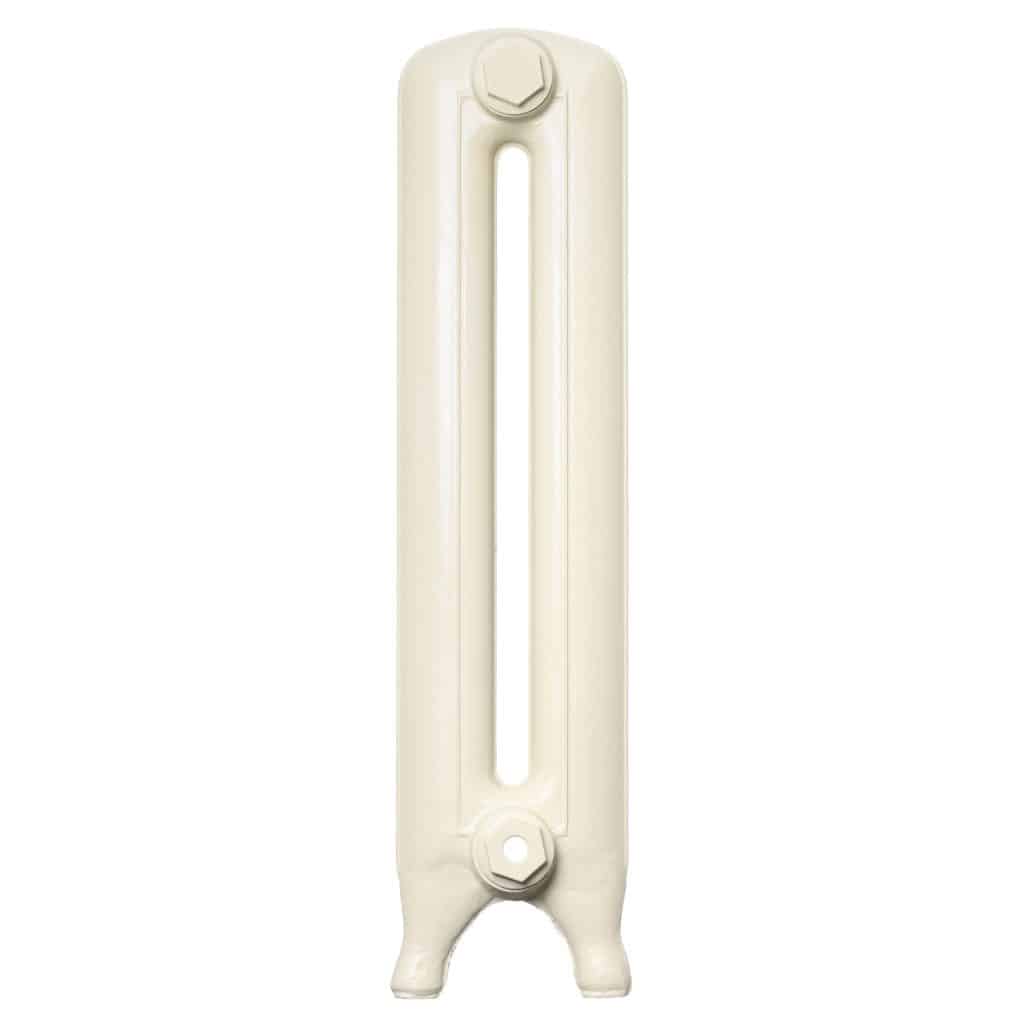
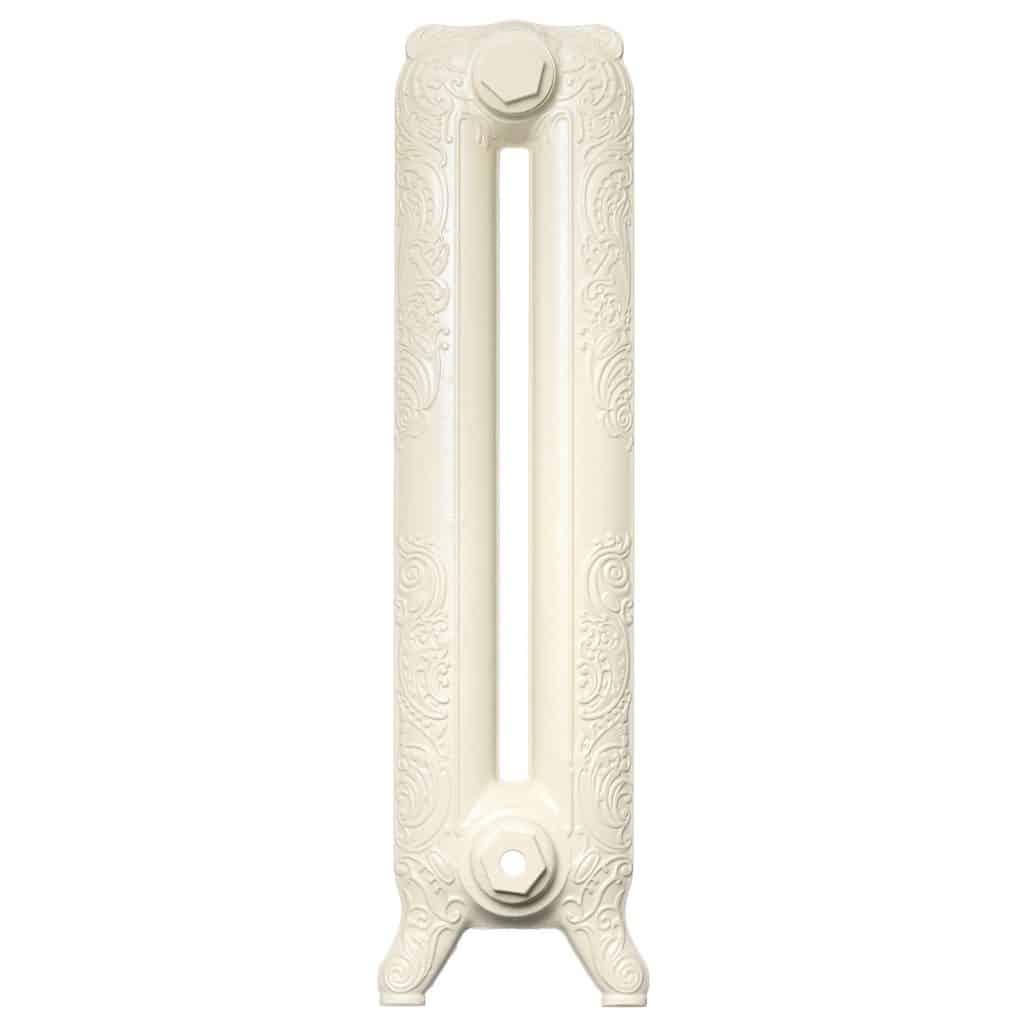
  • Cream white – a creamy white colour with a beautiful satin finish.
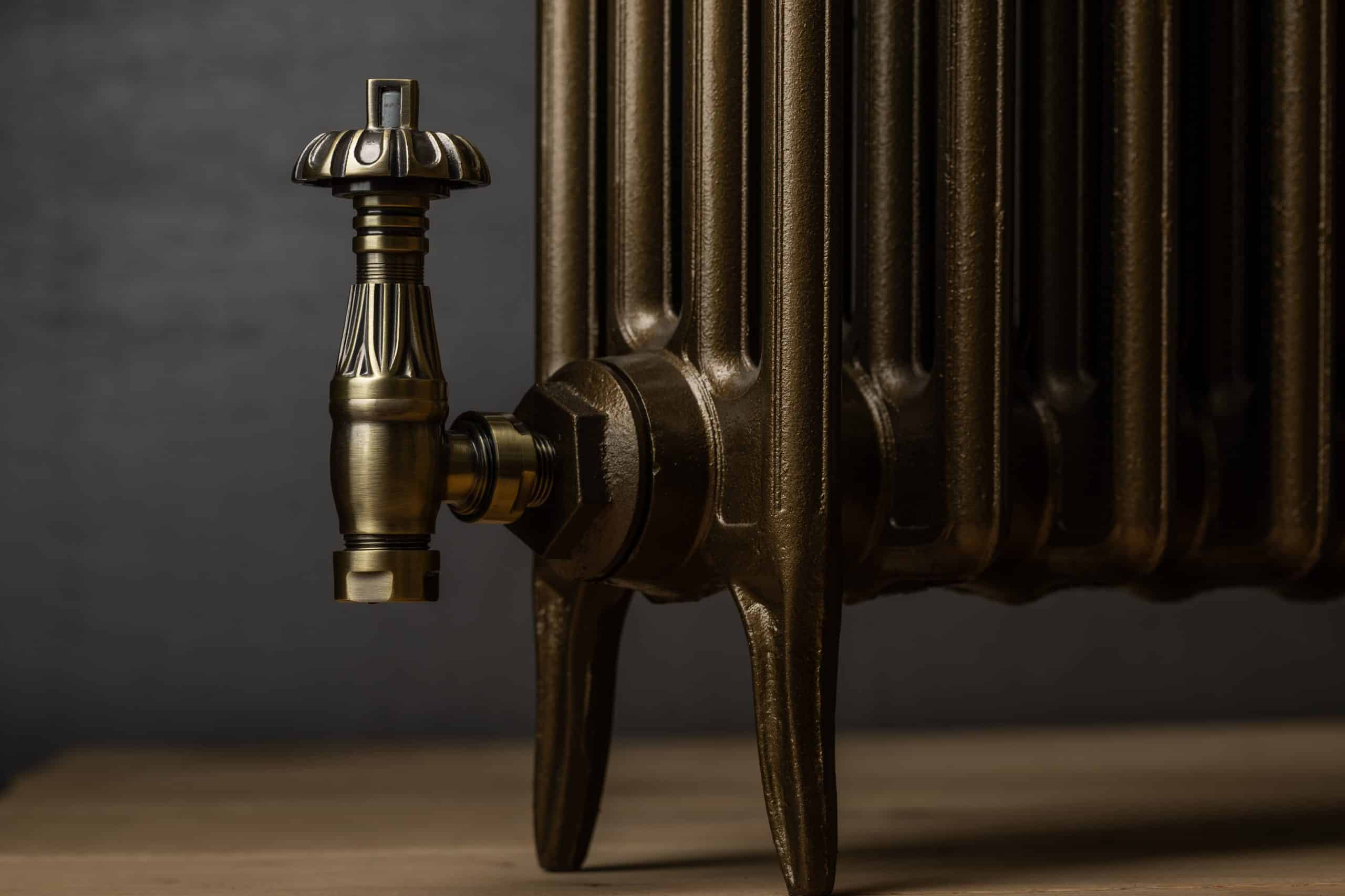
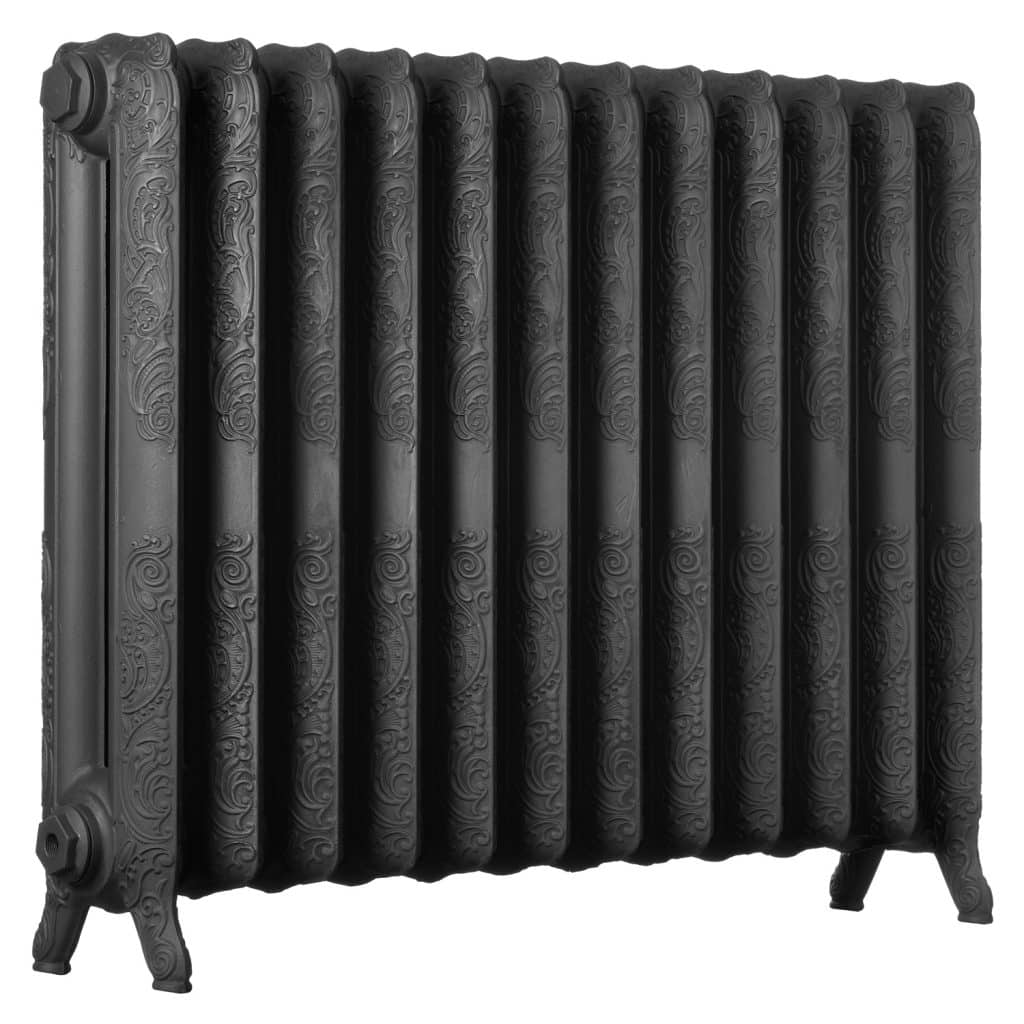
Vintage cast iron radiator with valve

You also have the option to choose the base-coat only option, but this should only be selected if you’re planning to have your radiators professionally painted. Perhaps you have a specific shade in mind, but still want to make the most of our incredible value radiators?

Choosing the right colour for your home

Our versatile radiator shades look beautiful in traditional and modern homes alike. If you’re not sure which colour will work for your room – remember that light will have a huge impact on the finished look – we encourage you to order paint samples before ordering. These are painted end caps that provide a preview of the colour, finish and the texture, so you can see how they all work together.

Some styling tips that we love to share:

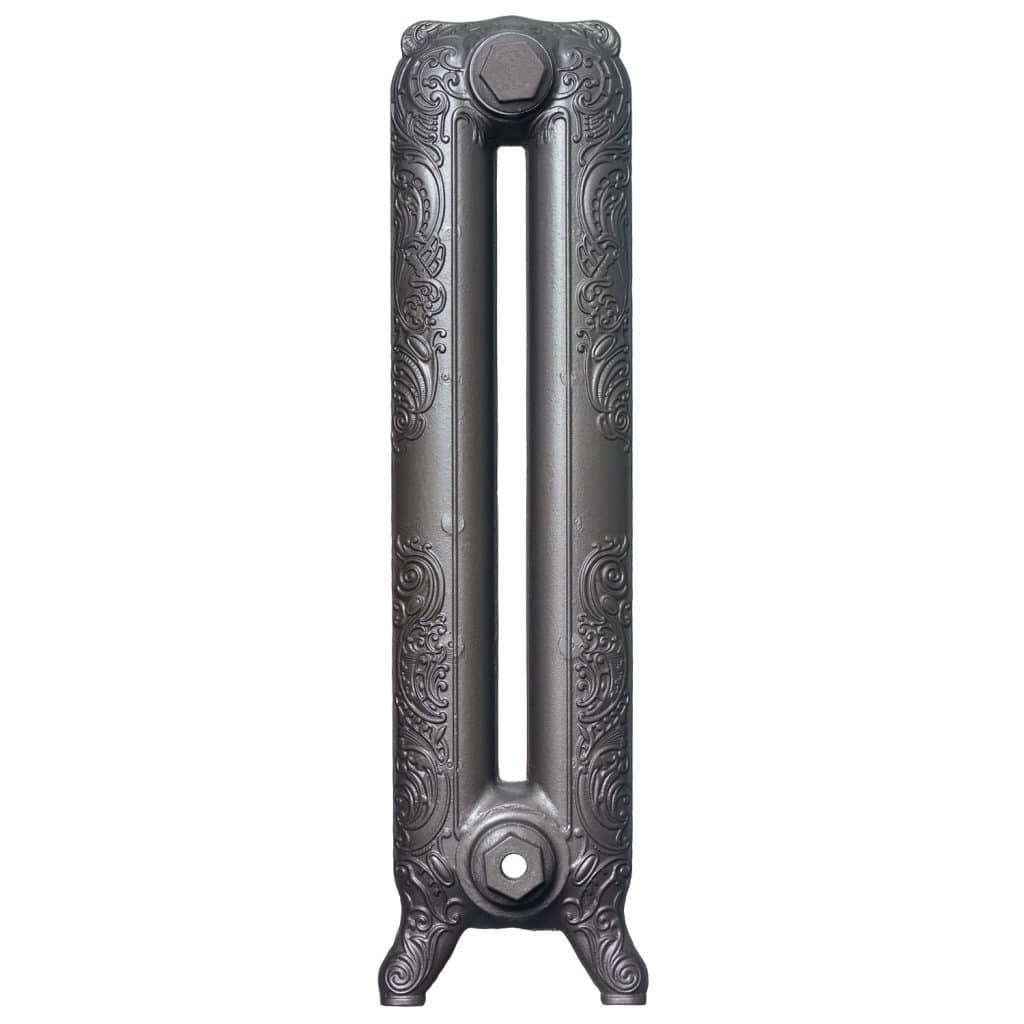
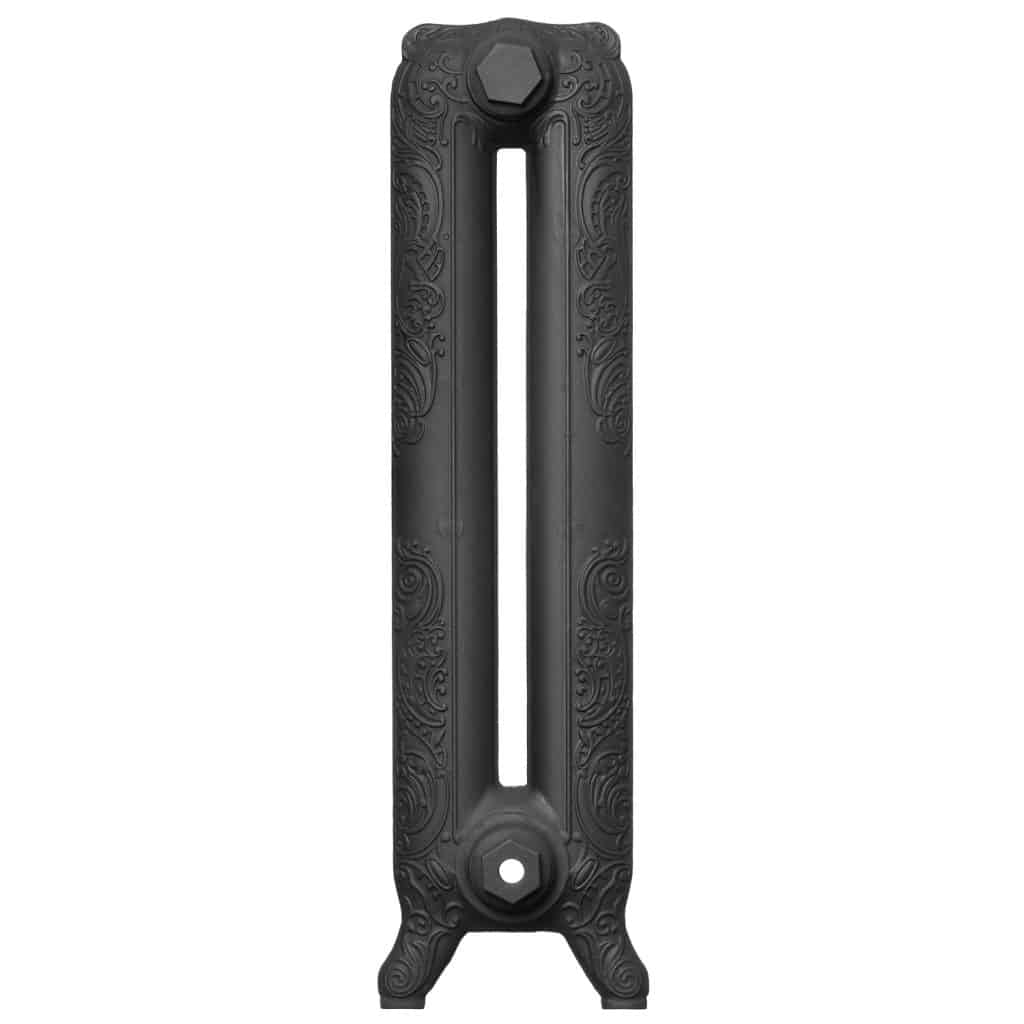
  • Highly ornate styles like the Balmoral and Art Nouveau are brought to life by metallic shades like gunmetal grey and antique bronze. Even the satin shade of black will elevate the embossed pattern.
  • For a traditional Victorian look, opt for matt black or gun metal grey in a sleek column design. The matt black colour is very close to raw cast iron, offering a back to basics look that is hard to beat.
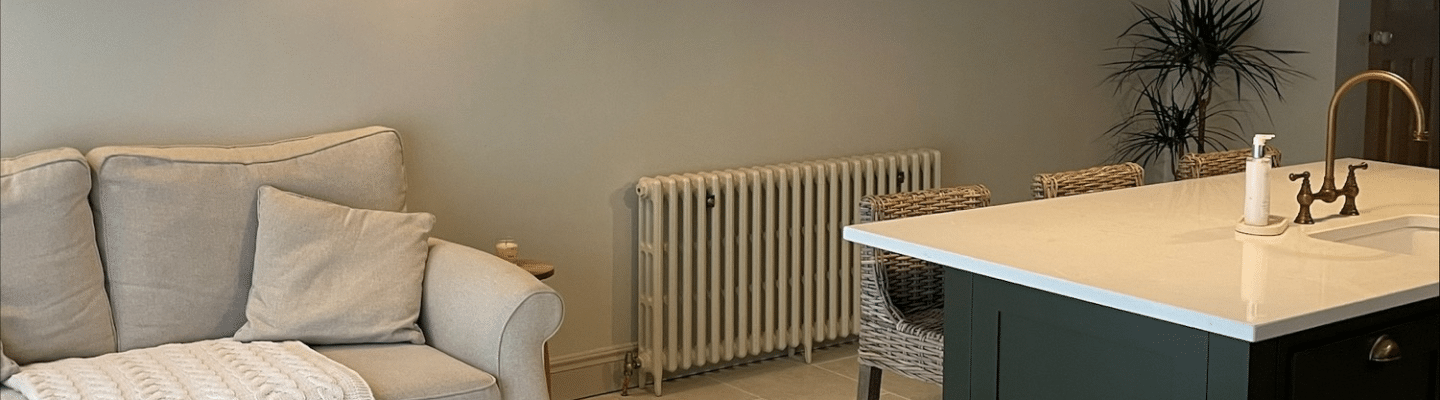
  • If you want your radiators to blend in against lighter coloured walls, consider the cream white shade as a delicate and elegant choice for your home. If dark shades feel too contrasting, then cream white can help to soften the look.
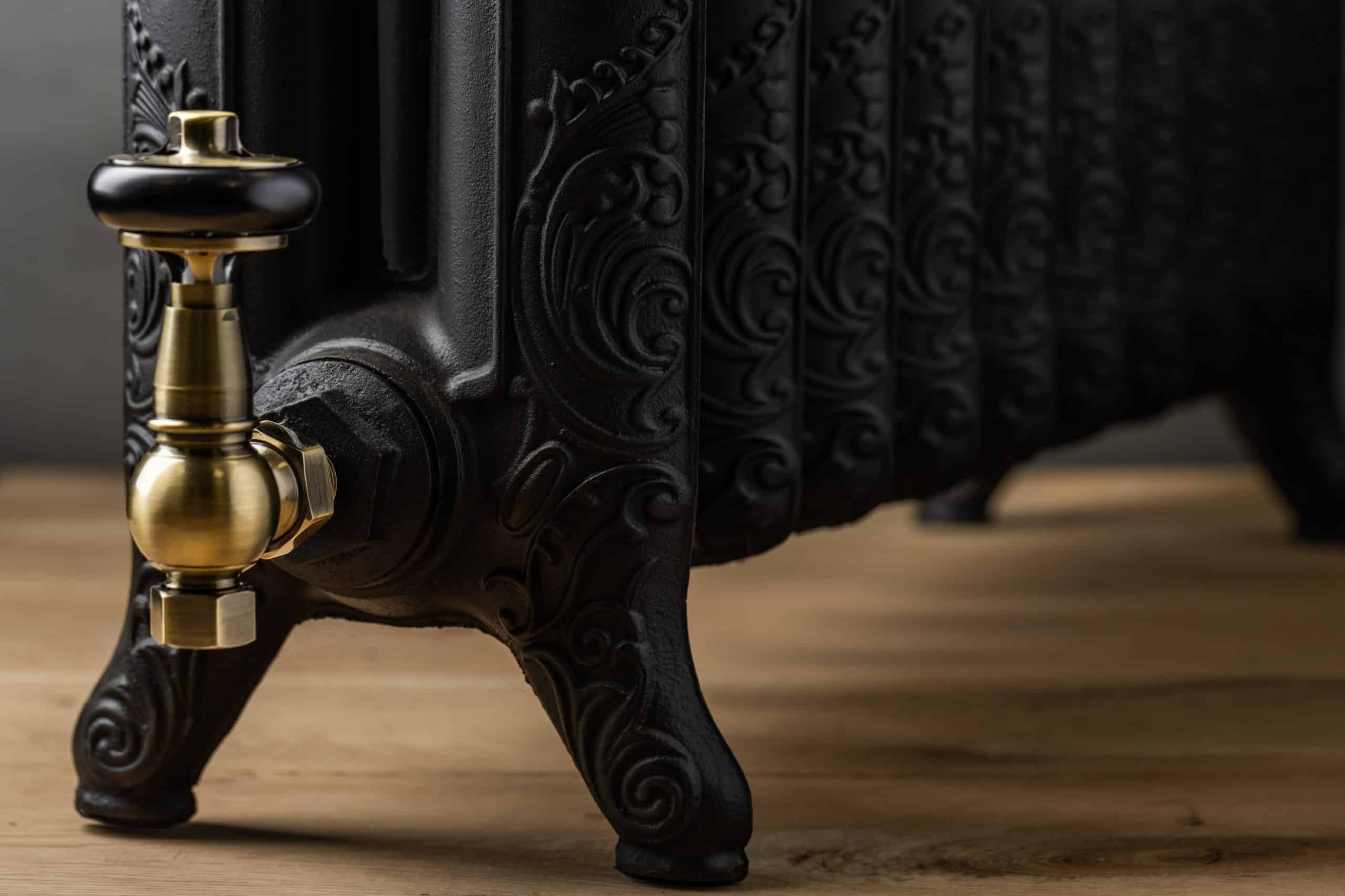
Elegant black cast iron radiator detail

Matching paint colours with valve finishes

Radiators are not complete until you add the valves. Not only in terms of functionality (you can’t install them without valves) but also in terms of style. Valves can feel overwhelming, but it’s easy enough to simplify your search.

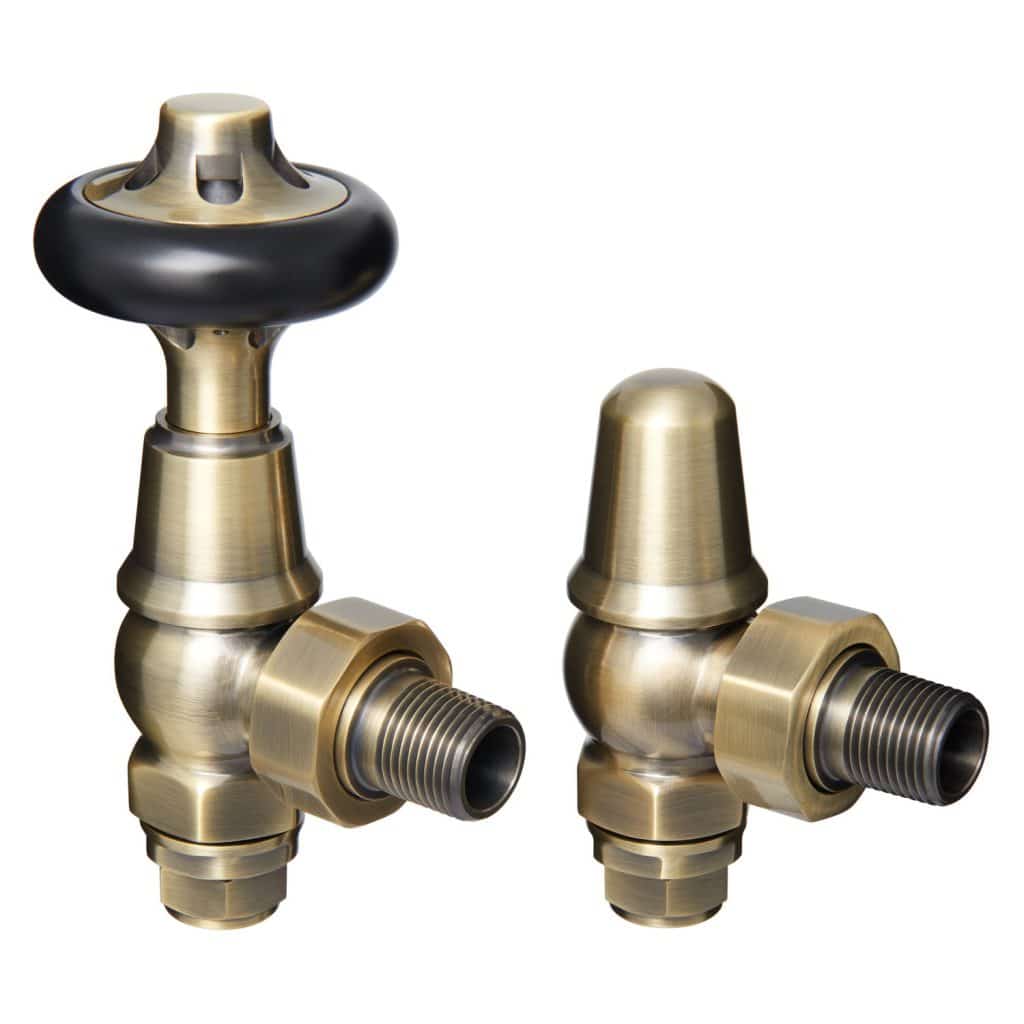
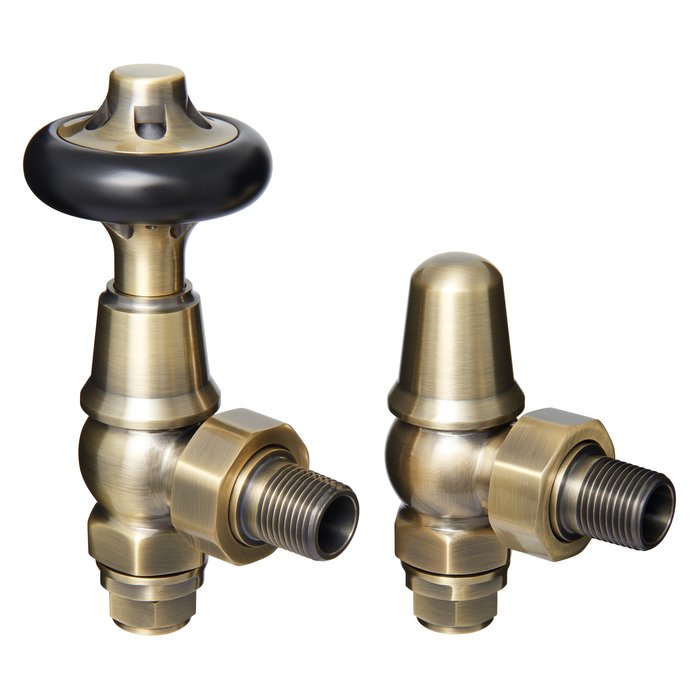
  1. If your radiators are going in any room other than the bathroom, you want to choose thermostatic radiator valves. These will allow you to create heating zones and make your home much more efficient. In the bathroom, opt for manual valves, as the heat and steam of the space will interfere with the internal thermostat.
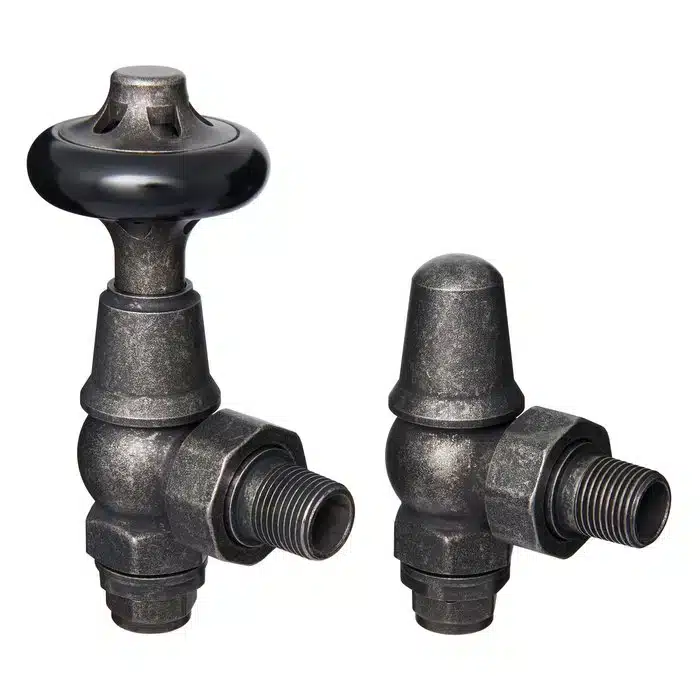
  2. Within each radiator valve style, you’ll find a selection of finishes. Notable styles and finishes include the Stratford in Antique Copper, a deliciously warming and vintage style. The Warwick in Nickel Black is another stunning choice, a dark and glossy choice.
  3. Consider the other metallic finishes in the room, including plug sockets, door handles and light switches. Sticking to similar metallic finishes can help to provide a cohesive finish.
  4. Decide if you want high or low contrast. Some customers like to match similar colours for a low contrast look, so they might opt for satin black radiators paired with nickel black valves. You might also choose high contrast, with a matt black radiator coupled with a bold and glossy gold/brass valve.
  5. The cream shade is often the most challenging to colour match, but we find customers will often gravitate towards antique brass or satin nickel for this radiator style.
  6. Keep your valves, wall-stays and pipe shrouds in the same finish. This is an easy way to keep the style cohesive.

Ready to start your radiator upgrade?

Get started with our BTU calculator to begin your journey to stylish new radiators, with vintage flair and modern efficiency.
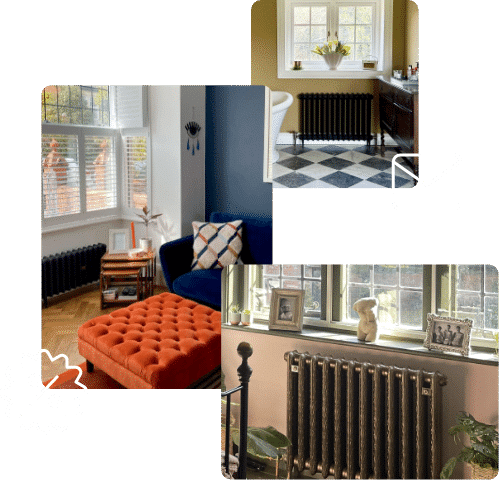
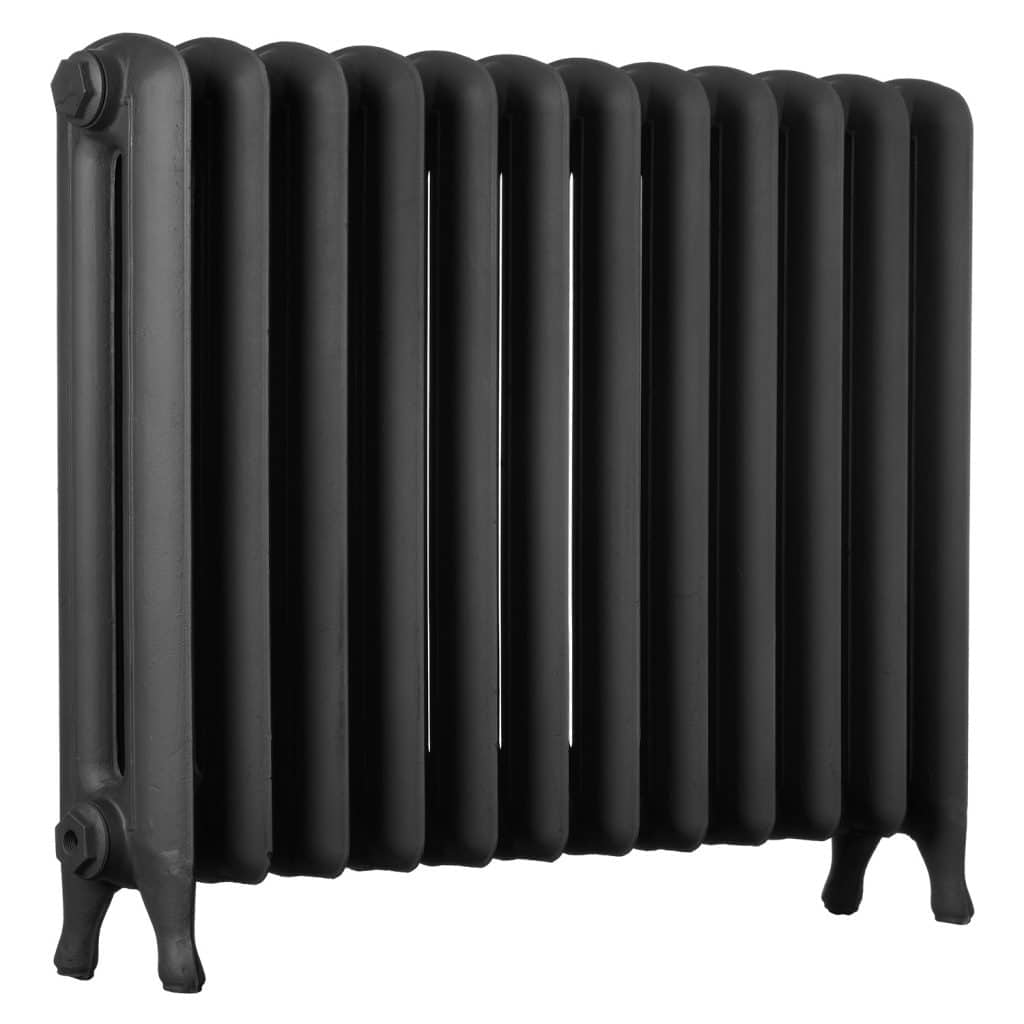
Check out our range of Traditional Cast Iron Radiators

Explore our full range of cast iron radiators and find the perfect match for your home.

Shop our radiators

Helpful Pages

Cast Iron Radiators for Modern Homes and Open‑Plan Living Spaces

  • Buying Guides
  • Style & Inspiration

5 May 2026

We talk a lot about cast iron radiators for traditional, period and heritage properties – but what about cast iron radiators for modern homes? In contemporary spaces, you’re far more likely to see open-plan living, with expansive floor plans. Modern homes may also include floor to ceiling folding doors, skylights, ceiling lanterns and other expansive glazing features.

So the question is: will cast iron radiators be up to the task of heating these spaces?

While there may be some specific considerations to keep in mind when planning your heating provisions, cast iron radiators will certainly be up to the challenge.

Let’s explore how cast iron radiators can be put to work in open-plan living spaces, and how you can maximise heat output and comfort in your home.

Cast iron radiators for modern homes: what are the challenges?

With traditional period properties, rooms are often clearly defined. They might have high ceilings and large windows, but the spaces are contained, so you’ll have an individual lounge, dining room, kitchen etc.

With a modern home, open floor plans are more common. Your entire downstairs living space could be a single room with distinct zoning. Modern homes will often prioritise light, which could mean more than just large windows. It could mean floor to ceiling glazing, roof lanterns and skylights.

So not only will you have a large space to heat, and you might be worried about heat loss from various sources. This can lead customers to oversize their radiators, but this isn’t always required, particularly in modern homes with very effective insulation. Modern glazing and insulation should counter the effects of the open-plan design.

How to plan cast iron radiators for modern interiors

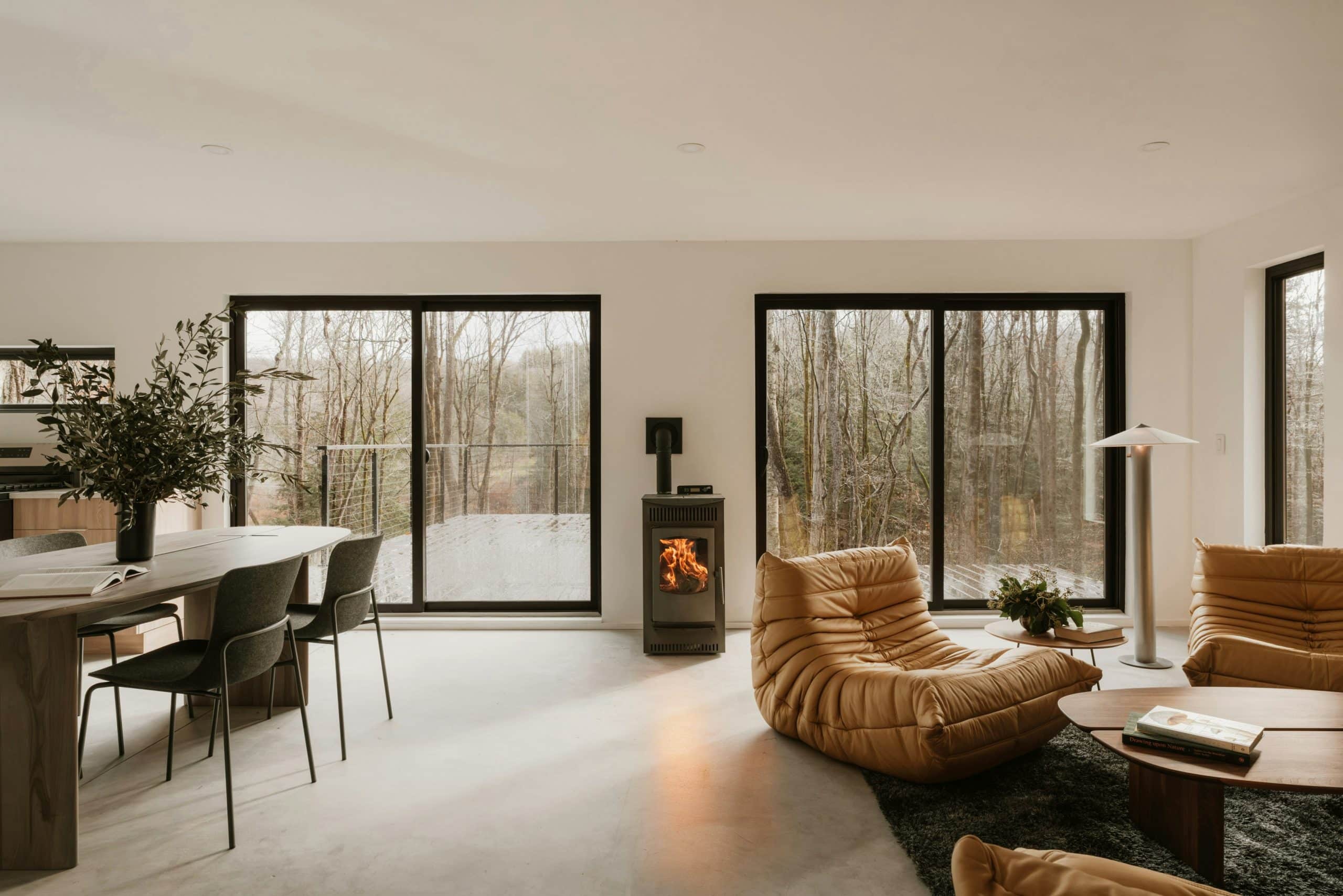
Cozy living room with natural light

Cast iron radiators are a smart choice for modern interiors for a number of reasons. First, they really do look the part, particularly the traditional 4 column or 3 column cast iron radiator.

The range of heritage colours also looks very intentional in modern spaces, despite being inspired by period homes – that’s the benefit of timeless and classic style.

  • Matt black provides sharp contrast for monochromatic spaces with organic textures.
  • Satin black offers a touch of sheen for more glossy modern interiors.
  • Cream white allows the radiators to blend into the background for pristine white interiors.
  • Antique bronze offers a deep mocha shade, perfect for warm-toned neutral decor.
  • Gunmetal grey is a beautiful slate shade that is perfect for edgy and modern interiors.

For large and open-plan spaces, you’re going to need to place multiple radiators, rather than relying on a single, over-sized radiator. This will allow for more even heat distribution around the room.

Pairing your cast iron radiators with thermostatic valves is another essential step, as this will help to control heat output and keep things comfortable. When the space reaches the desired temperature, your thermostatic valves will stop hot water flow to the radiator, reducing pressure on your boiler at the same time. This is separate to your central thermostat which controls the heating for the whole property.

One of the perks of cast iron radiators is that they will retain their heat even after your central heating is switched off. This results in a more even interior temperature, without dips and spikes that make it uncomfortable.
Radiator sizing for open-plan living spaces

Cast iron radiators for modern homes To work out the size of radiators you’ll need to heat your space, start with the heat requirements for the entire space. You can use our BTU calculator to get started. Factors like large windows or an orangery-style extension will increase the heat requirements.

Modern homes with good insulation and quality double glazing will not lose as much heat as an old-style uPVC conservatory, so don’t worry about oversizing too much. If you have doubts about the BTU requirements for your home, we recommend getting in touch with our team.

Once you have the BTU requirements for the entire space, you can determine where you would like to place your radiators based on the layout. So if you plan to have 3 radiators, you can divide the BTU requirements by 3, and then you have the size requirement for each one.

You may also have restrictions on the layout which mean you have to place one larger, oversized radiator and then balance this with smaller radiators.

Pairing cast iron radiators with a wood burning stove

A common addition to many modern homes is a wood burning stove. These offer incredible heat output, but families aren’t always up to the task of building a fire.

For those moments when you want instant heat at the flick of a switch, it makes sense to pair your wood burning stove with cast iron radiators.

When the fire is lit, you won’t need your radiators switched on, but you’ll appreciate them on cold mornings when you don’t want to spend any time building a fire.

Pairing cast iron radiators with underfloor heating

While it requires further planning, you can certainly pair cast iron radiators with underfloor heating. Since the temperature requirement is different for the two systems, your plumber might use the return water for the underfloor heating, as this will be cooler than when it is sent to the radiators.

Your plumber might also recommend a two-port valves system which separates the cast iron radiators from the underfloor heating and allows them to work independently. This would allow you to have underfloor heating for downstairs living areas, and then use beautiful cast iron radiators as a design focal point for bedrooms and bathrooms.

For any cast iron radiator installation, we always recommend professional installation to ensure you keep your warranty intact. Fitting guidelines for your plumber can be found here.

Check out our range of Traditional Cast Iron Radiators

Explore our full range of cast iron radiators and find the perfect match for your home.

Shop our radiators

Helpful Pages

5 - 7 days despatch on Radiators

All other accessories 1-2 days despatch

Price Promise

We will beat any like for like quote

10 year guarantee**

Ten year no quibbles guarantee

Built in UK

Hand Built in the UK & CE approved

Buy Direct

We’re up to 40% cheaper.