0800 294 8603




Gas central heating has been the norm in UK homes since the 70s. Prior to this, the majority of homes relied on coal fires for heat. And now we’re preparing for another significant shift in home heating.
To reduce reliance on fossil fuels, focus is moving towards low-carbon heating options such as heat pumps. Like the move from coal fires to central heating, the shift to heat pumps is going to require us to make changes to homes and the way we think about heating.
If you already have cast iron radiators in your home, or if you’re thinking of installing them when you make the switch to a heat pump, we’re here to answer any questions you might have.
In this short guide, we’ll answer some key questions, including:
- What are heat pumps and how do they work?
- Do heat pumps work with cast iron radiators?
- What do period property owners need to know about heat pumps?
If you’re struggling with radiator sizing for your property with a heat pump, get in touch with our team for further advice and support.
Heat pumps explained
Heat pumps are growing in popularity as a way to heat UK homes. This low-carbon heating and cooling system uses electricity to move existing thermal energy from the outdoors into your home. It essentially works like a big fridge, but in reverse.
The most common type is an air source heat pump that absorbs heat from the air and transfers it inside. The key difference between this and a boiler is that it is moving heat rather than creating it.
This process is far less energy intensive, which results in much lower CO2 emissions.
Another perk of heat pumps is that they can also work in reverse, pulling hot air from inside your home in summer and venting it outside. Homes with excellent insulation might suffer the effects in the summer months when heat becomes trapped inside, but a heat pump can help to bring some balance.
Heat pumps work particularly well in well-insulated homes, as this allows them to work more efficiently at lower temperatures. From 2028, all new-build homes will have to be built with the future in mind. This is all part of the Future Homes and Buildings Standards.
The switch to low-carbon heating
By 2028, developers will no longer be able to connect their new-build properties to the gas grid. This means that new gas boiler installations for new properties will come to an end. Developers will also be expected to install solar panels and heat pumps to help make new homes more efficient.
Existing boilers will be unaffected, and you’ll still be able to replace a boiler in your home if it breaks down. However, to encourage homeowners to move away from fossil fuels, the government has also launched the Boiler Upgrade Scheme (BUS). This scheme offers homeowners up to £7,500 towards the cost of replacing a fossil fuel heating system.
Over 70,000 homes have taken advantage of this scheme so far, and the annual budget is set to increase to £625m by 2027. The goal is to have 450,000 heat pump installations per year by 2030.
Needless to say, change is coming, and you might be wondering what this means for you and your home. The most important thing to remember is that you don’t have to switch to a heat pump. It’s only new homes that are required to have these installed. So if your boiler is nearing the end of its life, you might instead choose to upgrade to a highly efficient low emissions boiler.
If you do decide to switch to a heat pump, there may be additional changes you need to make to your home to ensure your heating can work efficiently.
What will this mean for period properties?
A key thing to note about heat pumps is that they operate at lower temperatures than a gas boiler. Remember, they’re moving heat, not generating it. This means they require certain conditions to be effective, and good insulation is one of them.
Operating at lower temperatures means that they can’t operate efficiently in draughty or poorly insulated homes. So if you’re living in a period property with poor insulation, you might want to consider updating this before making the switch.
It is certainly possible to bring insulation up to modern standards, but this will be an additional expense. Period homes require breathable insulation to prevent trapped moisture and damp.
If you already have cast iron radiators in your home, you’ll be pleased to learn that this can work extremely well with heat pump central heating – but it often requires a new approach to heating management.
With a gas boiler, you can switch it on and enjoy warm radiators in around 15 minutes. Once the desired room temperature has been reached, the thermostatic valve will switch off flow to the radiator. If you have cast iron radiators as part of your central heating system, these will retain heat and continue to warm your home after the central heating is switched off.
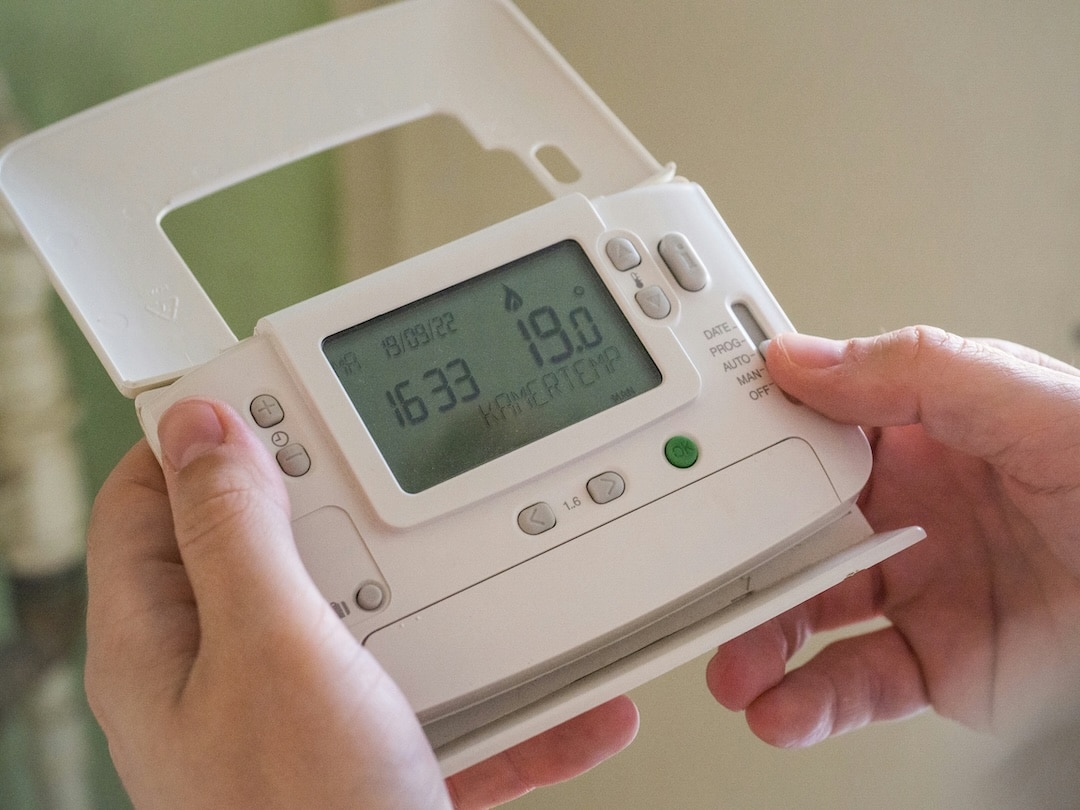
With a heat pump, the temperature flow is lower, so heating schedules need to be planned for efficiency. It’s important to understand that radiators will take longer to warm, but then retain heat and maintain a steady and consistent warmth.
Pairing cast iron radiators with heat pumps
There is a common misconception that cast iron radiators don’t work with heat pumps. This certainly isn’t the case, but you may require a larger radiator or multiple radiators to achieve the same heat output.
The high internal volume of cast iron radiators is actually an asset for the heat pump system. The material also has a high thermal mass, which means that it holds heat for longer and continues to emit this after the heat pump cycles off.
Advances in heat pump technology will also pave the way for better integration into homes. Until recently, most heat pumps operated at a temperature of around 35–55°C, but there are now newer models using R-290 refrigerant-grade propane, which is capable of delivering temperatures of up to 65–75°C. These are known as high-temperature heat pumps.
A high temperature heat pump operates at a temperature closer to gas central heating. These heat pumps are fully eligible for the £7,500 BUS grant. These are recommended for retrofitting older homes, including period properties. They offer a number of benefits, including seamless replacements without need to change pipework.
Top cast iron radiator choices for heat pumps
If you’re upgrading your heating system with a heat pump and want to complete the installation with stunning new cast iron radiators, we have a few tips…
- In period properties, you might struggle to find the wall space for the size of radiator required. Adding three radiators to a bay window is a highly effective way to reach your BTU requirements.
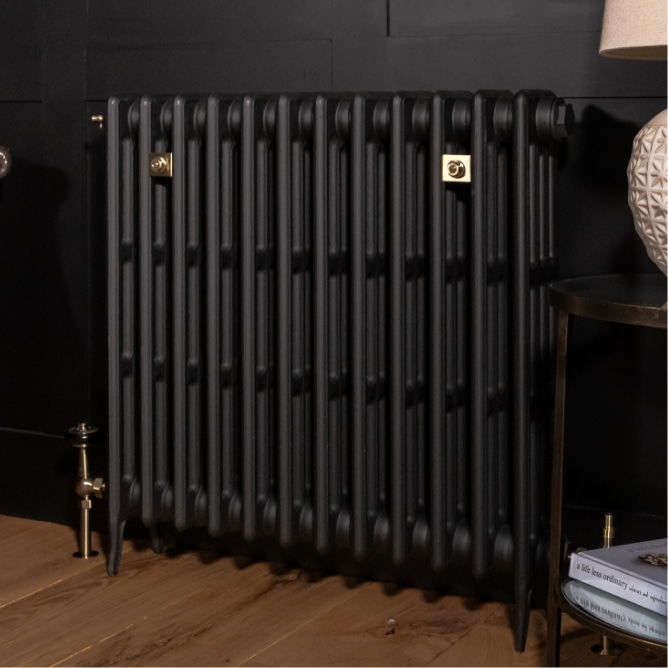
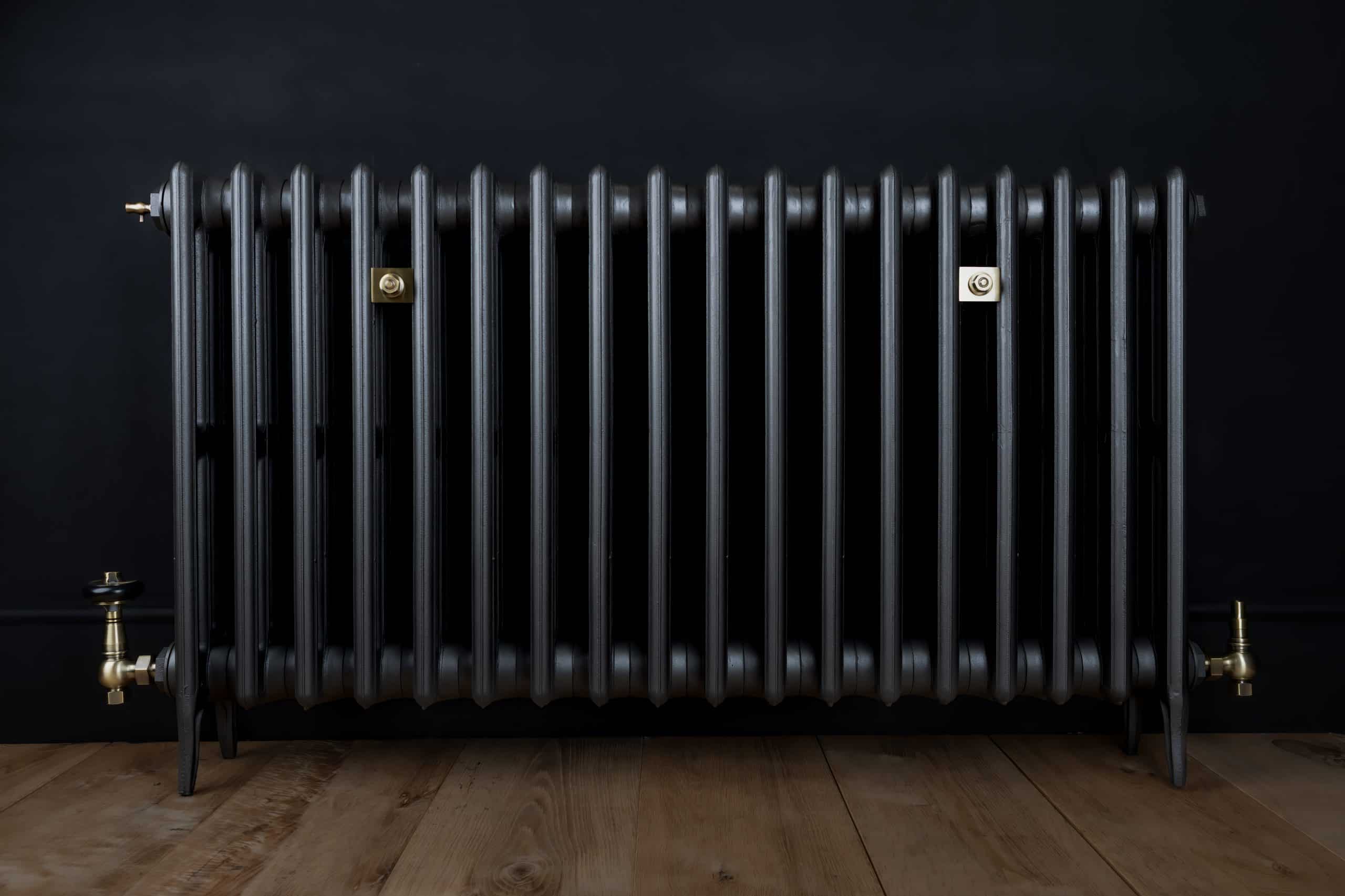
- Maximise the surface area with more columns. Our 9 column cast iron radiator is a design classic that also delivers an impressive heat output.
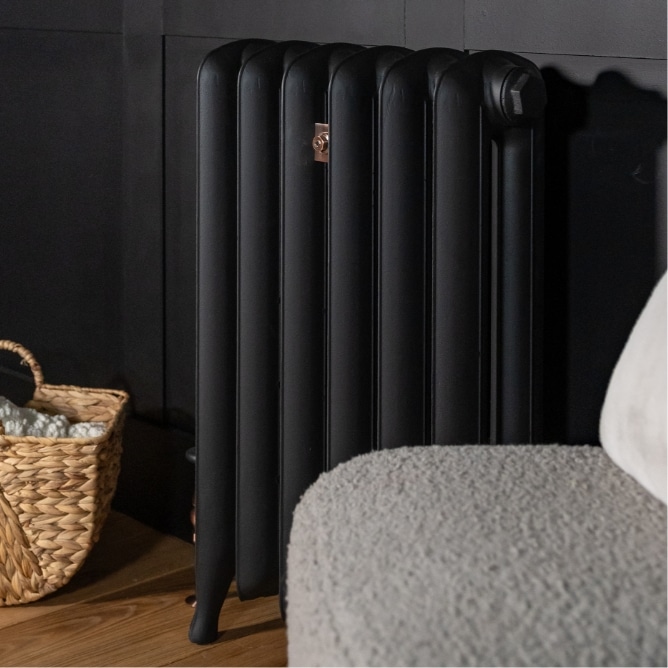
- Other designs with a high surface area include the Balmoral, which is a substantial 3-column design, and the 760mm 4 column cast iron radiator.